Church Stage Design: Ideas and the Tech Behind Them


Church Stage Design: the Ideas and the Tech Behind Them
In short. Most church stage idea galleries show a finished result and stay quiet about what holds it up: the lighting, the video signal, the projector, the ambient contrast. A stage design idea that ignores the tech stays a Pinterest photo. A church stage design is decided across three layers: the set, the lighting, the video or projection. Before choosing an idea, you have to settle the lighting budget against the video, measure the ambient light of the room, calculate the projection distance, and know who runs it on Sunday. A stage no volunteer knows how to run is a dead stage.
Most church stage design idea galleries show a nice photo and stop there. A careful set, clean light, a settled atmosphere. What they never show is what holds the photo up: the lighting set right, the video signal that arrives, the projector chosen for the room, the contrast that decides whether the image is readable or washed out.
A worship space design idea that ignores the tech stays a Pinterest photo. This guide tackles both: the ideas, and the setup that makes them hold up on Sunday morning, with a volunteer behind the console.
What "Church Stage" Really Covers
Before looking at ideas, you have to know what a stage is made of. Three layers, and most galleries show only one.
Set, Light, Video: the Three Layers Galleries Skip
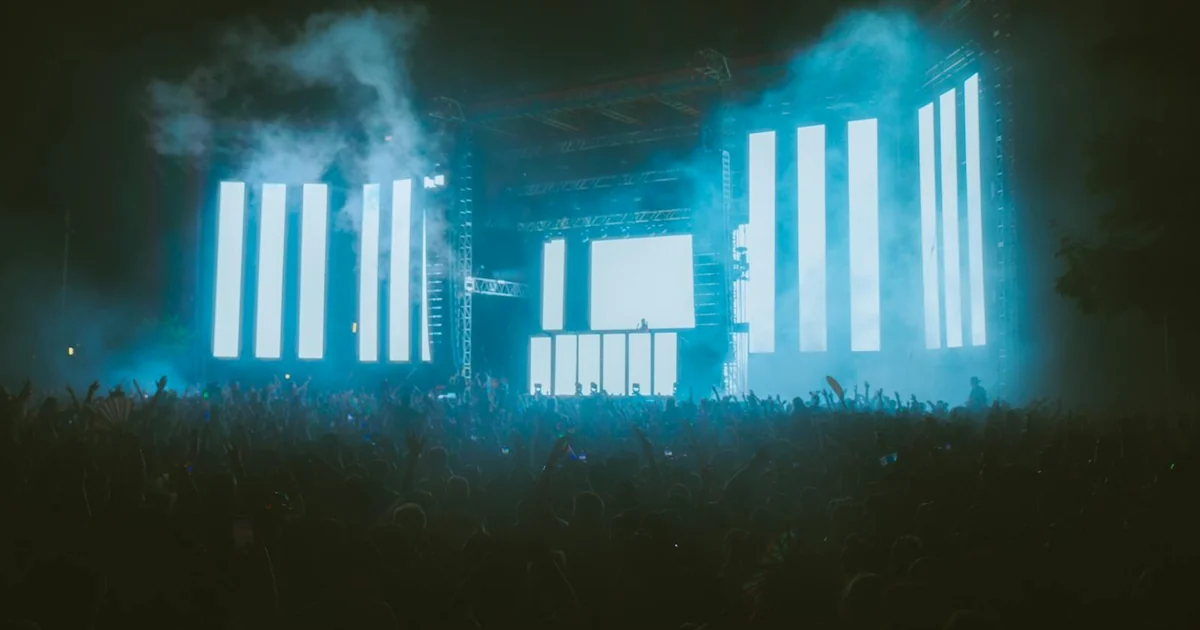
A worship space stage is made of three layers. The set or the backdrop: panels, fabric, structure. The stage lighting: the light fixtures that sculpt the space. And the video: a screen, projection, an LED wall where relevant.
Idea galleries mostly show the first one. The set is photogenic, light and video less so in a still image. The result: people copy a set without seeing that the photo holds up thanks to worked stage lighting. Good event scenography thinks the three layers together, and the event stage design guide sets the general frame. This article is the worship-space version of it.
An Idea Is Only Worth the Room It Lives In
A stage idea does not exist in a vacuum. It lives in a precise room, with its volume, its walls, and above all its light.
A room with large windows, bathed in daylight, does not behave like a closed room. The same projection idea will look washed out on one side, sharp on the other. Before copying a stage seen elsewhere, you look at your own room: ambient contrast, natural light, windows. The room decides as much as the idea.
Stage Ideas, Sorted by What They Cost to Run
An idea does not just have a purchase cost. It has a running cost: the time, the skills, the Sunday operator. We sort them by that.
Low Effort, High Impact: Fabric, Panels, Repositionable Light
The most cost-effective ideas are the simplest. Stretched fabric panels, a few movable set panels, and stage lighting you can reposition.
This trio costs little, builds fast, and changes without rebuilding everything. For a small church stage, it is often the best base: a neutral backdrop, a clean focal element, and light that does the work. A simple, well-lit stage idea almost always beats a complex set no one knows how to run.
A Modern Stage: Clean Lines, LED Accents, Projection Surfaces
A modern church stage is rarely more elements. It is fewer elements, better made. Clean lines, a restrained colour, deliberate empty space, and light that draws the stage instead of just lighting it.
A modern small-church stage works with a defined focal point, good lighting, and a projection surface that supports the message instead of competing with it. The trap of the modern style is thinking it can be bought. It gets designed. Restraint demands more thought than a busy set, not less.
Seasonal Sets: Christmas and Events Without Rebuilding Everything
A Christmas stage should not require starting from scratch. The teams that struggle are the ones that tear everything down and build everything back up each season.
The right method: design the base stage so seasonal sets drop on top of it. A reusable structure, a neutral backdrop, lighting presets. A Christmas stage then goes up and comes down fast. The season changes the set, not the framework.
Small Church Stage: the Constraints Are the Brief
On a small stage, you do not start from the mood board. You start from the constraints. The size of the room, the volunteer team, the real budget.
A small-church stage succeeds when it fits inside those three limits. Fabric panels, repositionable lights, a single clean focal element beat a complex set no one will know how to build or run. The constraint is not an obstacle to design, it is the design brief.
The Technical Setup Behind the Look
Here is the part the galleries never show. Without it, the idea does not hold.
Light First: Why Most Stages Are Badly Lit
The most common fault on a worship space stage is not the set. It is the light. Badly set, badly placed, badly thought through, before anything else.
A badly lit stage cancels out a beautiful set. A well-lit stage saves a modest set. Stage lighting is not a cosmetic layer you add at the end, it is the first technical decision. Resources from a manufacturer such as ETC on stage lighting show how much light sculpts a volume. It took me a while to understand that on eight stages I reworked, light was the real problem in most cases, not the set.
Stage Projection: Throw Ratio, Surface and the Daylight Problem
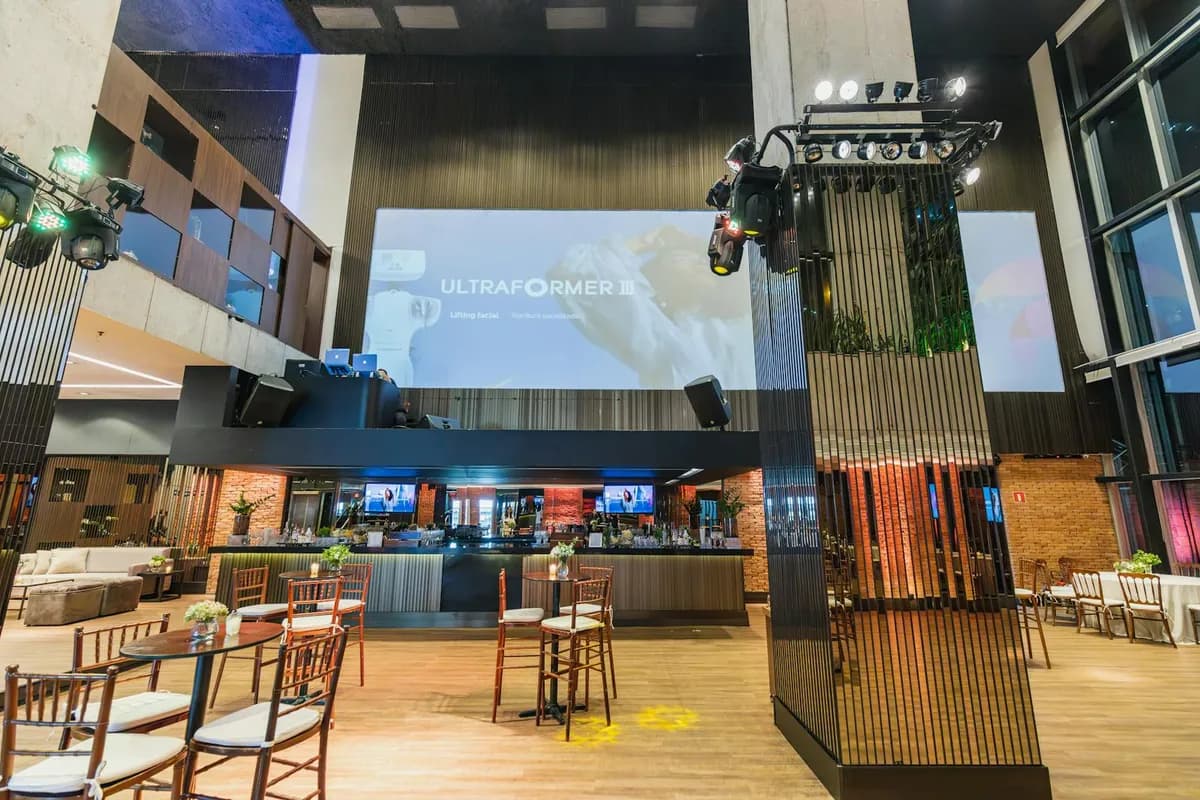
Projection on a stage works in a room with controlled light. In a room with large windows, the image washes out, unless you know how to manage the ambient light.
Two figures matter. The throw ratio, the relationship between the projection distance and the image width, which decides whether the projector fits in the room. Indoors, you usually work between 0.8 and 1.5. And the lux on the surface: indoors with controlled ambient light, you aim for 70 to 100 lux. You reason in lux on the wall, not in lumens on the projector spec sheet. To calculate the available throw distance, a throw ratio and projection distance calculator does the job. And to check the result before validating, a test pattern to check projection uniformity shows immediately if the edges fall off. If you want to understand the overall mechanics, how projection mapping works runs through the chain.
LED Walls and Screens: a Short Note
An LED wall emits its own light. It holds up in a bright room where a projection washes out. The trade-off: a higher purchase cost, and a real running cost.
For most small and medium churches, light and projection cover the need. An LED wall makes sense at scale, in a large room. If you dig into the LED track, the complete LED wall guide details the specs and the costs.
Who Runs It on Sunday: Design for the Volunteer, Not the Integrator
A stage is designed for the person who will run it. And on Sunday, in a church, that is almost always a volunteer, not a professional operator.
A stage that needs a trained operator no one on the team can be is a dead stage. Beautiful in the photo, unusable on Sunday. Before validating an idea, you ask the real question: who presses the buttons, and will they manage without stress.
When a Church Stage Idea Is Not Worth It
Not every idea deserves to be built. Three cases where it is better to say no.
When the idea needs an operator no volunteer can be. A stage you do not know how to run on Sunday is a dead stage. Technical complexity that outruns the team is not a goal, it is a risk.
When you project in a room bathed in daylight with no budget to control it. The projection will be washed out, underexposed, unreadable. The money would be better placed on stage lighting, which works in any ambient condition.
When you copy a megachurch on a parish budget. Scale changes everything. The LED wall of a 2,000-seat room makes no sense in a 120-seat room. Copying the scale next door is over-investing in the wrong place. Most parishes would gain more by putting that budget into light.
Direct Answers
What is church stage design? It is the design of everything visible on a worship space stage: the set or the backdrop, the lighting, and any video or projection. A good design is not just a look, it takes into account the ambient light of the room, the budget, and who will operate it during the service. Most online galleries only show the finished result.
How do you design a stage for a small church? You start from the constraints, not the mood board. A small church stage works when it fits inside the size of the room, the volunteer team, and a realistic budget. Fabric panels, repositionable lights and a single clean focal element beat a complex set no one will know how to run on Sunday.
How much does church stage design cost? It depends on which of the three layers you invest in: set, lighting, video. Fabric and panels are the cheapest entry. Stage lighting is the highest-impact spend for most churches. Projection and LED come last and cost the most to run. There is no single price, but light almost always returns the most per euro invested.
Can you use projection for a church stage? Yes, but the room decides. Stage projection works in a space with controlled light. In a room with strong daylight or large windows, the image looks washed out, unless you can manage the ambient light. You read the throw ratio and the lux on the surface before committing, not the lumens on the spec sheet.
What is the difference between an LED wall and stage projection? An LED wall emits its own light and holds up in a bright room, but it costs more to buy. Projection is cheaper and more flexible, but needs controlled ambient light. For most small and medium churches, light and projection cover the need; an LED wall makes sense at scale.
What makes a modern church stage? Clean lines, a restrained colour, intentional empty space, and light that sculpts the stage rather than just lighting it. A modern stage is generally fewer elements made with care: a defined focal point, good light, and a projection surface that supports the message instead of competing with it.
How do you change a church stage for Christmas or an event? You design the base stage so seasonal sets drop on top without rebuilding everything. A reusable structure, a neutral backdrop and lighting presets let you put up and take down a Christmas stage fast. The teams that struggle are the ones that start from scratch each season.
A worship space stage is not judged on the Sunday-evening photo. It is judged on how easily a volunteer runs it on Sunday morning. Set, light, video: the three layers are thought through together, and light almost always comes first. If you have a stage idea in mind and a doubt about what it demands technically, a second opinion on a stage AV setup costs less than a set that gets built and then abandoned because no one can run it.

Video mapping consultant and trainer
Fifteen years of monumental and museum-grade installations: Arc de Triomphe (7 editions), Museum of Art and Light Kansas (108 projectors), Atelier des Lumières. Design, multi-projector calibration, audit, Modulo Kinetic training.
Need technical expertise?
Let's discuss your video projection or mapping project. Reply within 48h business hours.
Discuss your projectDid you enjoy this article?
Receive my upcoming tips, field experience and best practices straight to your inbox.
By subscribing, you agree to receive our emails. You can unsubscribe at any time.
1 email per week maximum, unsubscribe in 1 click