LED Wall Rental vs Buy: A Decision Guide for Events
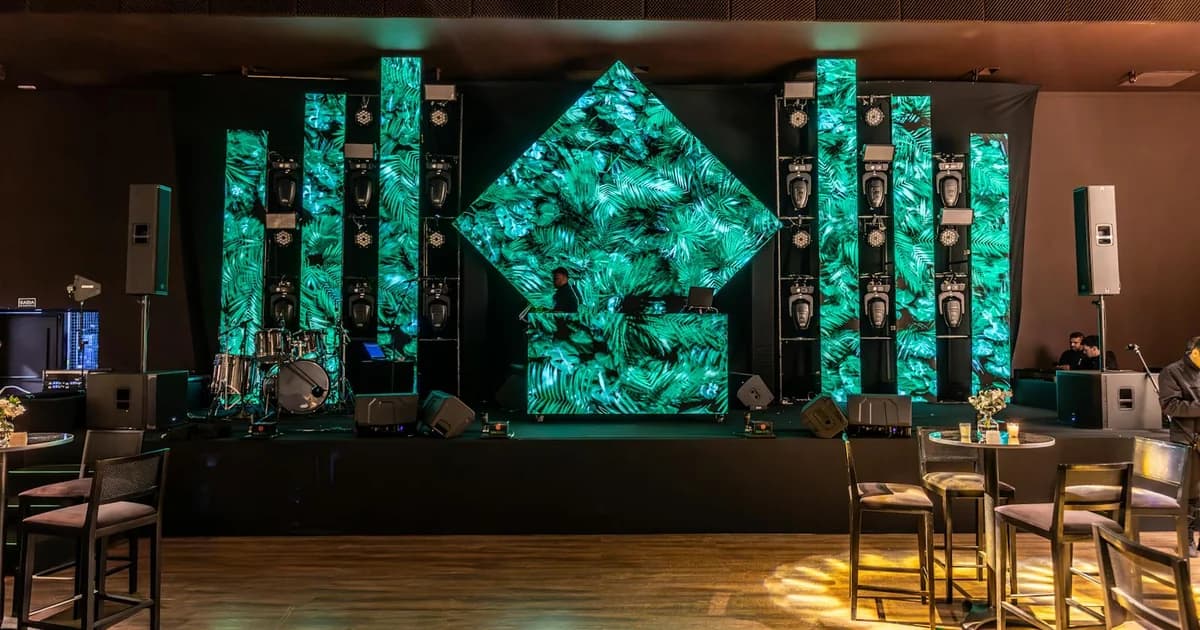

LED Wall Rental vs Buy: How to Decide
In short. Whether to rent an LED wall or buy one has no universal answer, it has a threshold. Below a certain number of days of use per year, you rent. Above it, you buy. The practical rule: a wall that serves one-off events stays a rental, a wall running in a permanent install gets financed by purchase or leasing. Pixel pitch drives the whole budget, the finer it gets the higher the bill. The costs people forget are never the panels: it is the processor, the rigging, the transport, and the spare panels. And in two or three specific cases, projection still beats LED. This article gives you the math, not an opinion.
A client asked me last year whether he should buy an LED wall for his trade show stand. He had a purchase quote, the figure looked reasonable to him, he just wanted a sanity check. I asked him one question: how many days a year will the wall be used. Answer: four. Four days. Buying an LED wall for four days of use a year is like parking a truck in your living room because you move once every three years.
Renting an LED wall or buying one comes down to a single number: annual days of use. Not a crush on image resolution. Here is how to set that number, and what to check before you sign in either case.
(Quick aside: type "led wall" into Google and you mostly land on bedroom lamps and decorative wall clocks. This guide is not about those. We are talking modular panels for events and AV installs.)
What an LED wall rental actually includes, and what it doesn't
An LED wall rental quote that fits on three lines hides more problems than it solves. An LED wall is not a single object. It is a chain. And every link has a cost.
Panels, processor, rigging, transport, operator: the real line items
An honest rental quote lists at least these line items:
- The panels. The surface in square meters, multiplied by a per-square-meter rate that depends on pixel pitch. This is the visible part of the quote, and often the only one the client looks at.
- The processor. The brain of the wall. It takes the signal, maps it across the panels, handles color and refresh rate. Without it, the panels are dead plates.
- The rigging. The structure that carries the wall, or the ground supports. The weight of an LED wall is not negotiable, you need a mounting point that holds.
- The transport. Flight cases, the truck, the handling. An LED wall travels in heavy cases, not in a bag.
- The operator. Someone who builds it, calibrates the processor, and stays reachable during the event. A panel dropping out mid-show does not get fixed over the phone.
If one of these line items is missing from the quote, ask why. Either it is bundled elsewhere, or it shows up as an extra on the day.
The hidden costs renters forget to price
Three line items regularly slip through, and they are the ones that derail a budget.
Spare panels. A panel can fail. It is rare, but it happens, and when it happens mid-event you have a black rectangle in the middle of your image. With no spare panel on site, that black hole stays there until the end of the show. The quote should state how many spare panels are delivered. Not "some spares". A number.
Power distribution. An LED wall draws power. The bigger the surface, the more supply you need, and the venue's power does not always keep up. Running lines, load balancing, sometimes a generator. It has a cost, and it gets forgotten.
Content scaling. Your video is Full HD. Your wall has an odd resolution, neither 1080p nor 4K, because it is an assembly of panels. Someone has to adapt the content to the wall's actual resolution. If that is not you, it is one more line item.
This is exactly the "ballpark quote" scenario. The underpriced line item is never the panels. It is processor calibration time, transport, and spares. To read a quote without getting burned, see how to read a projection project budget.
When buying an LED wall makes sense
Buying is justified by length of use, not by the feeling of "owning your gear". Here are the two situations where the math leans toward buying.
Permanent installs and the leasing reality
An LED wall running every day in a reception hall, a store, a museum, a TV studio: there, buying is worth a serious look. The wall runs continuously, the cost spreads across years of use.
But "buying" does not always mean writing one big cheque. On permanent installs, the gear often goes on a lease. You spread the cost over three or four years, and at the end of the contract you replace the wall. That is not an accounting detail. An LED panel ages, its brightness drops, its color drifts. A five-year-old wall does not look like a new one. Planning the replacement is planning the real cost of ownership, not just the sticker price.
The break-even math: days of use per year
Here is the logic, without a price grid because rates vary too much from one context to the next.
On one side, the annualized cost of purchase or lease: price of the wall divided by the number of years before replacement, plus storage, plus maintenance, plus insurance, plus transport every time it goes out. On the other side, the cost of a one-off rental, multiplied by the number of times you need it in a year.
As long as the total of annual rentals stays below the annualized cost of ownership, you rent. When it flips, you buy. The threshold is not the same for everyone: it depends on the target pixel pitch, the surface, and how often you use it. But the reasoning is always the same.
A common-sense marker: a wall that serves a few days a year stays a rental. A wall that serves more than half the year gets financed. Between the two, you have to put the real numbers down.
When renting an LED wall makes sense
Renting is not the broke option by default. It is often the technically correct call.
One-off events, touring, uncertain specs
A brand launch, a trade show, a corporate party, a concert: one-off use, so rental. You are not going to store an LED wall between two events six months apart.
A tour is the same with a nuance. The gear moves, it takes hits, it needs constant maintenance. Many productions prefer to rent to transfer that risk to the rental house, which has a fleet and spare panels.
And when the specs are not locked, renting protects you. You do not know yet whether the wall will be 6 or 9 meters wide, or what pixel pitch the venue imposes: buying now means betting on a need you do not know. Event projection runs on the same one-off logic, see events versus permanent, what changes technically.
Why renting buys you the latest pixel pitch
An argument people forget. LED technology moves fast. The pixel pitch that was fine three years ago is now standard, and an even tighter pitch has arrived in rental fleets.
Buying a wall freezes a technology. In four years, your bought wall will be dated while a rental house has refreshed its fleet. Renting means accessing recent gear at every event without carrying the depreciation. For one-off use, that is a real advantage, not a sales line.
Pixel pitch: the spec that drives the whole budget
Pixel pitch is the distance between two neighboring LEDs, measured in millimeters. A P2.9 has 2.9 mm between each point. A P1.5, 1.5 mm. The smaller the number, the denser the image, and the more the square meter costs. It is the number one variable on your quote.
For the full technical detail, panel layout, processor and power supply choices, see the complete technical LED wall guide. Here, we stay on decision logic.
Viewing distance and pixel pitch: the rule of thumb
The field rule: the minimum viewing distance in meters roughly matches the pixel pitch number. A P3 reads cleanly from about 3 meters. A P1.5 holds up from 1.5 meters. Below that distance, the eye picks out the points and the image pixelates.
This is not a law of physics down to the millimeter, it is a starting point for framing the need. The question to ask is not "what is the best pixel pitch", it is "how far away will the audience be looking at the wall".
Why a finer pitch is not always the right call
The client reflex is to want the tightest pitch possible. I once got a request for a P1.2 on a stage backdrop wall viewed from 15 meters minimum. At 15 meters, nobody will tell a P1.2 from a P4. The eye does not resolve that density at that distance. The client would have paid three or four times the per-square-meter rate for pixels no one would see.
A fine pitch is justified when the audience is close to the wall: a presentation screen, a stand backdrop you walk past at one meter. For anything viewed from a distance, a wider pitch does the same visual job for a fraction of the price. Choosing pitch by viewing distance, not by the fear of "not doing it well enough", is the first line of savings on an LED wall quote.
LED wall vs projection: where projection still wins
An LED wall is emissive. It produces its own light. A projection is reflected, it depends on the surface and on ambient light. That is the fundamental difference, and it has a direct consequence: an LED wall holds up in broad daylight where a projection gets crushed by the venue's light.
That does not mean LED wins everywhere. Projection stays better on large surfaces, on complex geometry, and when the budget is tight on short use. I am not redoing the comparison here. For the line-by-line detail, see our full LED versus projection comparison.
When an LED wall isn't worth it
An LED wall is not the answer to everything. Here are the cases where I tell people to look elsewhere.
A textured or non-flat surface. An LED wall wants a flat surface and a square structure. If the brief involves a sculpted facade, a volume, an organic geometry, LED cannot follow. That is projection territory, which wraps the real shape.
A tight budget on a single evening. For one short use, projection often costs a fraction of the price of a rented LED wall, processor and rigging included. If the venue's light can be controlled, a well-calculated projection does the job for far less.
Content not built for pixel density. If your content is a standard low-resolution video, you are paying for a fine wall to display a blurry image. The wall does not create quality, it reveals the content's quality. And its absence.
A venue with no rigging access. No structure to hang from, no permit, a floor that will not hold a ground-supported wall: the LED wall becomes a structural headache before it is an image. Sometimes the answer is to not do an LED wall at all.
Ambient light you control. If you control the venue's light, LED's number one argument, its brightness in daylight, serves no purpose. A properly sized projection costs less and looks great in the dark.
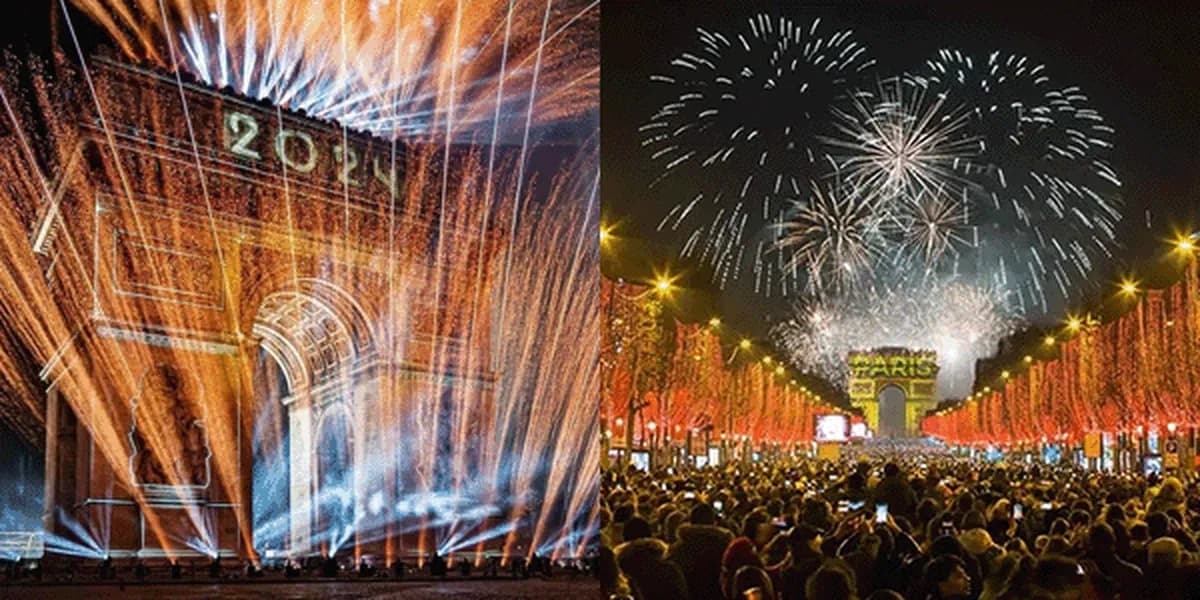
A one-off brand event like the Champions Parade is the textbook context where LED rental makes sense: single use, no permanent install, a need for recent gear. Conversely, on a heritage facade, an LED wall simply has no place.
How to brief an LED wall rental supplier without getting burned
A supplier who quotes an LED wall as a black box, a per-square-meter price with no detail on the rest, is selling a promise they cannot guarantee. Pixel pitch and the number of spare panels have to be on the quote. Full stop.
Here is the checklist to demand on a rental quote:
- The pixel pitch. Spelled out, P2.9, P3.9, whatever, but written.
- The exact surface in square meters and the number of panels.
- The processor supplied, its model, who calibrates it.
- The number of spare panels delivered on site.
- The operator hours included, build and strike covered.
- The transport and handling, priced.
- The power distribution: who supplies the power, who runs the lines.
- The calibration time margin. Calibrating a processor and checking uniformity takes hours, not ten minutes.
If a supplier refuses to detail these items, that is not a rental house, that is a surface reseller. The vague quote is the number one cause of bad surprises on event day.
Straight answers
How much does it cost to rent an LED wall? There is no fixed price, and be wary of anyone who gives you one without questions. The quote depends on pixel pitch, surface in square meters, the processor, the number of spare panels, operator hours, transport, and calibration margin. Those variables move the bill, not a catalog rate. Ask for a quote itemized line by line.
How much does an LED wall cost to buy? Here too, it depends mostly on pixel pitch and surface, a fine pitch costs several times the per-square-meter rate of a wide one. But the purchase price is only the start. Add storage, maintenance, insurance, transport every time it goes out, and replacement every three or four years. The real cost is the annualized cost of ownership, not the figure on the purchase order.
What is an LED wall? It is a screen made of modular panels covered in LEDs, assembled to form a large display surface. Unlike a projection, an LED wall is emissive: it produces its own light instead of reflecting a projector's. That is what keeps it readable in broad daylight.
How do LED walls work? Three elements. The panels, which carry the LEDs and form the image. The processor, which takes the video signal, maps it and spreads it across each panel. The power supply, which feeds current to the whole. The processor also handles color and refresh rate. Without it, the panels display nothing.
Rent or buy: where is the break-even? The break-even is measured in days of use per year. As long as the total of your annual rentals stays below the wall's annualized cost of ownership (purchase or lease, plus storage, maintenance, transport), you rent. When it flips, you buy. A wall that serves a few days a year stays a rental, a wall that serves half the year gets financed.
What pixel pitch do I need? It depends on how far away the audience views the wall. Field rule: the minimum viewing distance in meters roughly matches the pitch number. A P3 reads from 3 meters, a P1.5 from 1.5 meters. No point paying for a fine pitch on a wall viewed from a distance, nobody will see the difference.
Is an LED wall better than projection? Neither better nor worse, different. The LED wall wins in broad daylight and on flat surfaces. Projection wins on large surfaces, complex geometry, and tight budgets. The right call depends on the venue, the content, and the budget. For the detailed comparison, see LED screen versus projection.
Renting or buying an LED wall comes down to the number of days of use per year, not the urge to own gear. Below the threshold, you rent. Above it, you finance. And in several cases, projection is still the better answer. If you are still torn between LED and projection on a specific project, the projector calculator helps put numbers down on the projection side. And if you have an LED wall quote on your desk and a doubt, a second opinion on a quote costs less than a wall bought for four days of use a year.

Video mapping consultant and trainer
Fifteen years of monumental and museum-grade installations: Arc de Triomphe (7 editions), Museum of Art and Light Kansas (108 projectors), Atelier des Lumières. Design, multi-projector calibration, audit, Modulo Kinetic training.
Need technical expertise?
Let's discuss your video projection or mapping project. Reply within 48h business hours.
Discuss your projectDid you enjoy this article?
Receive my upcoming tips, field experience and best practices straight to your inbox.
By subscribing, you agree to receive our emails. You can unsubscribe at any time.
1 email per week maximum, unsubscribe in 1 click