Interactive projection: when your audience becomes the show
Creative design and technical integration of interactive devices for immersive projections
Technologies mastered
I design and integrate the right sensors for each project. Here are the technologies I work with every day.
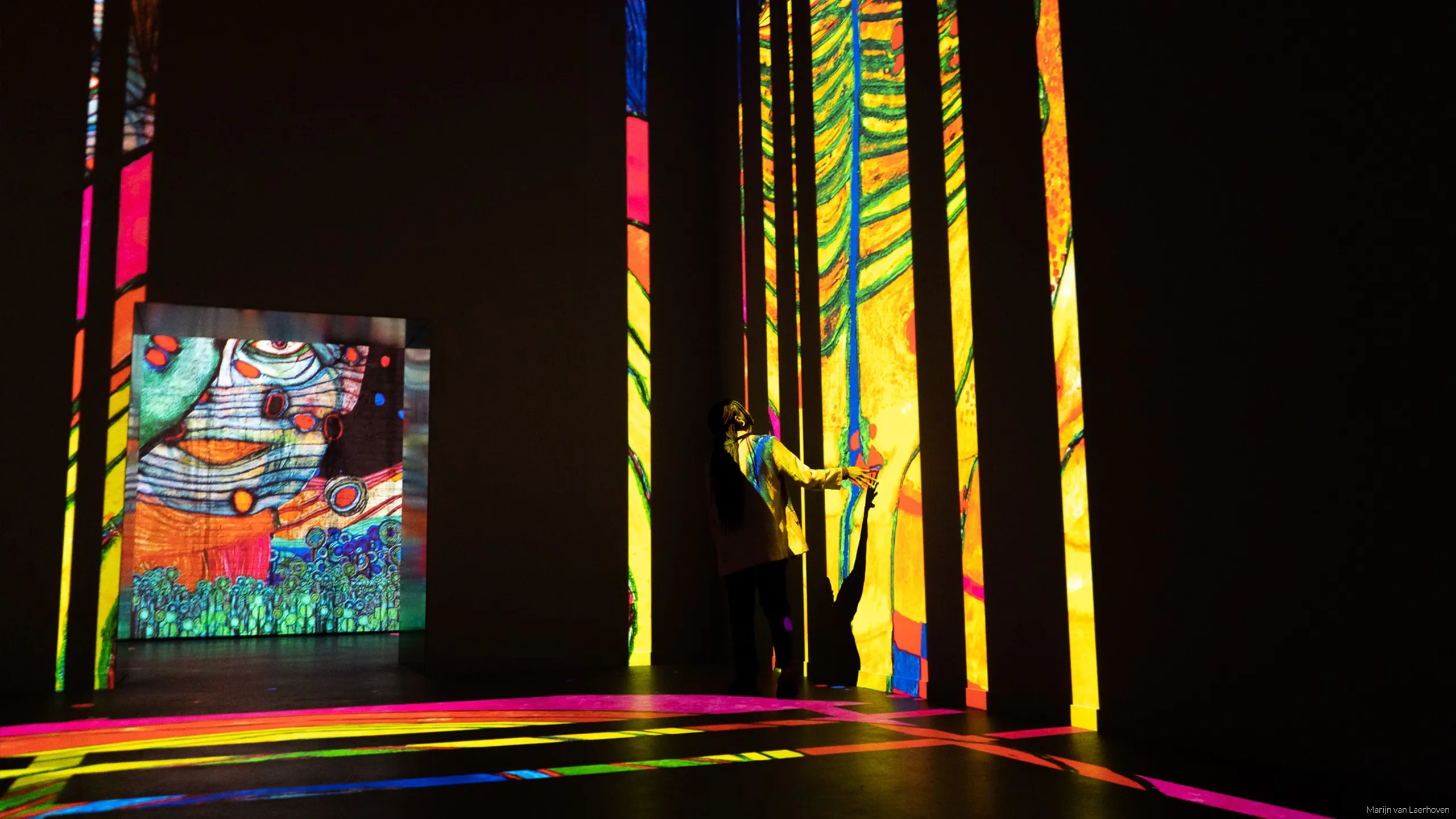
2D LiDAR
A laser beam scans a flat surface and detects the presence or movement of visitors in front of the wall. The system reacts in real time, triggering animations at the exact point of interaction.
Light Stripes, Amsterdam: visitors reveal light animations by walking along a 30-meter corridor.
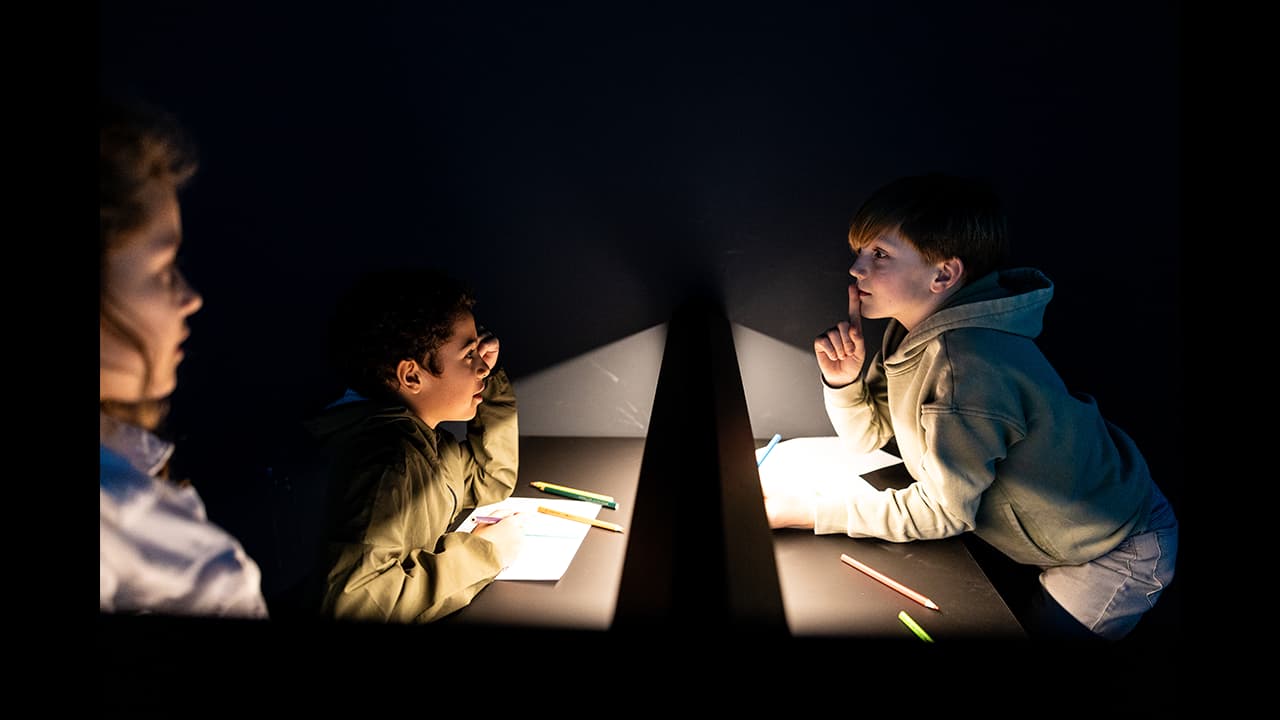
3D LiDAR
A volumetric sensor maps the space in 3D and tracks each visitor's position in the room. Multiple people can interact simultaneously, each with their own zone of influence.
Kids Atelier, Paris: children interact with projected walls, each triggering their own visual reactions.

Drawing scanner
Visitors draw on paper. A scanner captures the drawing, the software transforms it into an animated 3D texture and projects it onto the walls within seconds.
Kids Atelier, Paris and Hamburg: children's drawings come to life on the room's walls.
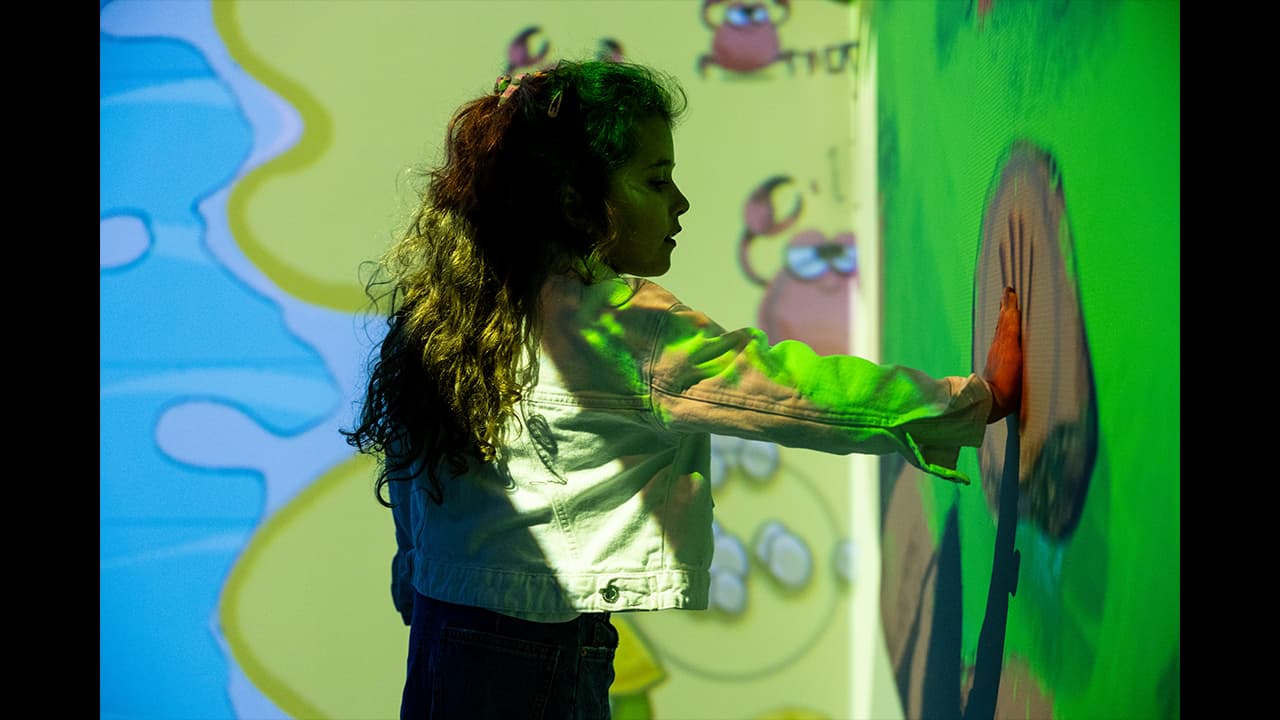
Physical triggers
Buttons, rotary encoders or pressure sensors trigger actions in the projection. A tangible, intuitive interface accessible to all audiences.
Kids Atelier, Hamburg: a boat race controlled by rotary encoders, playable by multiple visitors.
Types of experiences
I design and develop custom interactive experiences, integrated into your projection installations.
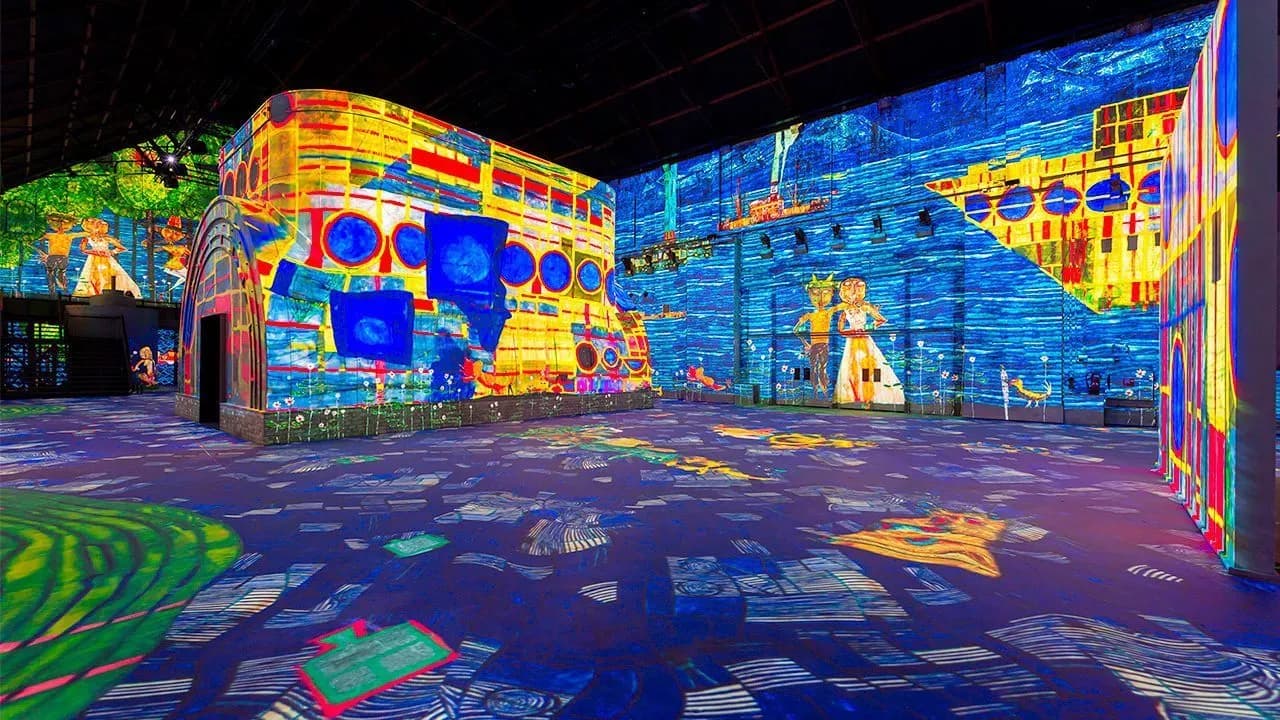
Wall interactions
Presence or motion detection to reveal content, trigger animations, follow visitors. The wall becomes a reactive screen.
View case study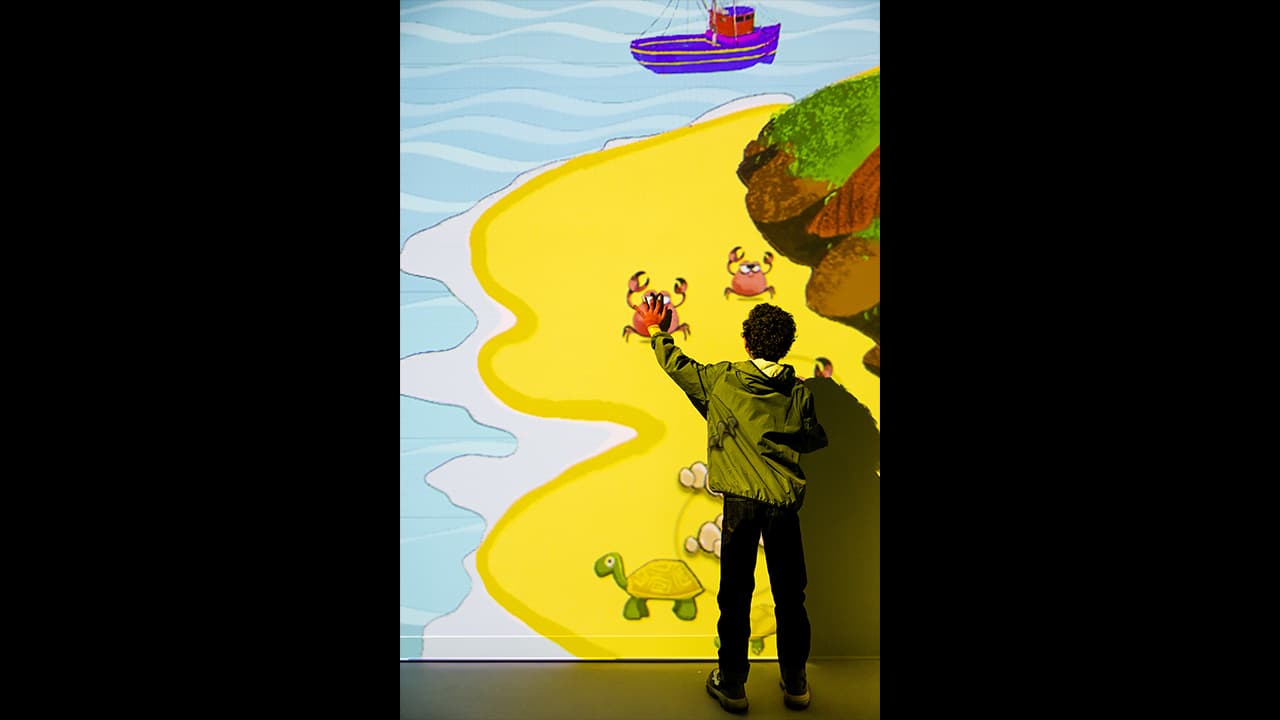
Participatory experiences
Visitors become creators: scanned drawings come to life on the walls, personalized content projected in real time. Everyone leaves with a unique memory.
View case study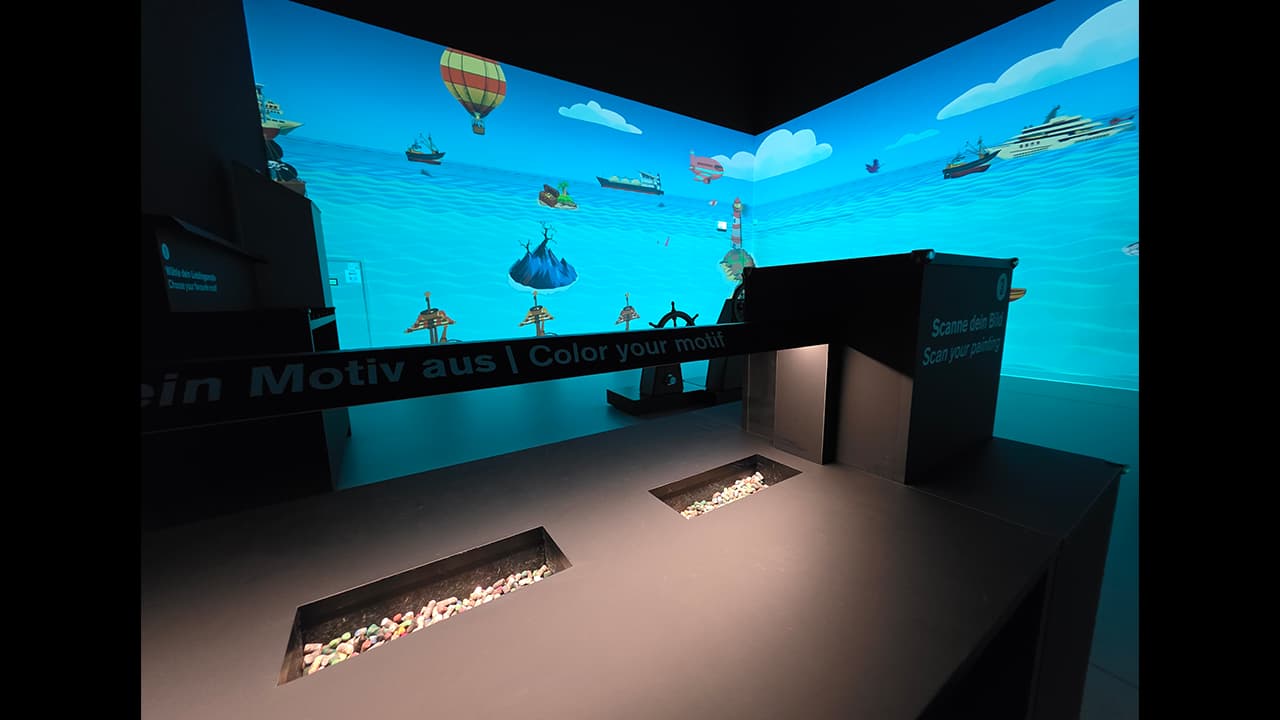
Multi-user installations
Experiences designed to work with 1 or 50 simultaneous visitors, no queues, no touchscreens. Interactivity lives in the space, not on a screen.
View case studyHow it works
Brief
We define the desired experience and the venue constraints
Design
I propose an interactive concept tailored to your installation
Development
I code the interactivity in Modulo Kinetic (Python/JS)
Installation
On-site adjustments and calibration
The complementarity between the artistic and the technical dimensions allowed us to achieve a result up to what we imagined. Modulo Kinetic offers advanced rendering tools that allowed us creating what we wanted.

Key figures
What you gain
Who it's for
Go further
Case study: interactive experiences
3 detailed projects with videos, images and results.
Complete guide: sensors for interactive mapping
LiDAR, cameras, scanners: how to choose the right sensor.
Custom development
Custom tools and plugins for your projects.
Technical integration
Installation and calibration of projection systems.
A real case: the Kids Atelier at the Atelier des Lumieres
The Atelier des Lumieres, in Paris, wanted a space where children are not spectators but actors. The principle: a child draws, the drawing is scanned, and it comes to life animated on the projection walls.
The setup has to hold 7 days a week in public operation, take several simultaneous visitors, and work with no queue and no touchscreen. The latency between the interaction and the visual reaction has to stay invisible.
I designed and integrated the interactivity inside Modulo Kinetic: drawing scanner, 3D LiDAR to follow each child in the space, physical triggers. All coded in Python and JavaScript inside Modulo, with no external tool to maintain.
The setup has run since 2019, in Paris and Hamburg. Every child leaves with a unique souvenir, and the venue has a space that renews itself without rewiring.
What you get
Frequently asked questions
What sensors do you use?
2D LiDAR to detect presence and movement along a surface, 3D LiDAR to follow several visitors in a volume, a drawing scanner for participatory experiences, and physical triggers like buttons or encoders. I choose according to the experience aimed for.
Does it hold up in intensive public operation?
Yes, that is even the main design criterion. My interactive setups run 7 days a week since 2019 across three permanent sites, with up to 50 simultaneous visitors.
Is the interactivity a separate tool to maintain?
No. I code the interactivity directly into Modulo Kinetic, in Python and JavaScript. No third-party software, no extra machine to maintain. Everything is in the media server you already operate.
Do you work with creative studios?
Yes, often. The studio carries the art direction, I carry the technical design and integration. The complementarity of the two is what makes a setup that works.
Have an interactive experience in mind?
Contact meCookies and privacy Learn more
Cookies and privacy
This site uses cookies to measure audience and improve your experience. You can accept, reject or customize your preferences at any time. Learn more