Video Mapping Training: Why No School Exists

Video Mapping and Stage Design Training: Why No School Exists
In short. There is no video mapping school. Full stop. You can search for a projected scenography course for weeks, you will find generalist art schools and five-day media server courses, and nothing in between. The craft is too young and too cross-disciplinary to fit in a curriculum: it demands five layers no one teaches together, image, 3D, code, media server, integration. The real path combines three sources: a short media server course for the software basics, fieldwork for calibration and brief reading, and self-teaching for the rest. A diploma changes nothing. What counts is the list of projects delivered.
There is no video mapping school. Full stop. You can search for a projected video mapping training course for weeks, you will run into two things: generalist art schools that train stage designers, and five-day media server courses. Between the two, a void. Not a term, not a module, nothing.
I say it bluntly because it is exactly the question a younger colleague asked me recently: where do I go to train. The honest answer is not a school address. It is a path. Here is what exists, what is missing, and how to train anyway.
What "Stage Design Training" Really Covers
The word scenography does not say everything. Before searching for a course, you have to know what we are talking about.
Scenography in the Art-School Sense: a Craft, Curricula, but Not Video Mapping
Scenography is an old, well-established craft. Space design, light, narrative, material, the relationship with the viewer. Applied-arts schools and recognised curricula have trained it for a long time. A course like the one at ENSATT in Lyon covers live-performance scenography, with a real grounding in craft culture.
These curricula are serious. They simply do not deal with video mapping. For the stage designer's craft seen from the field, its scope and its outlets, I have already written the stage designer's craft seen from the field. This article does not redo that work. It marks the boundary: article 03 covers the craft, this one covers the training.
Projected Scenography: the Layer Curricula Do Not Cover
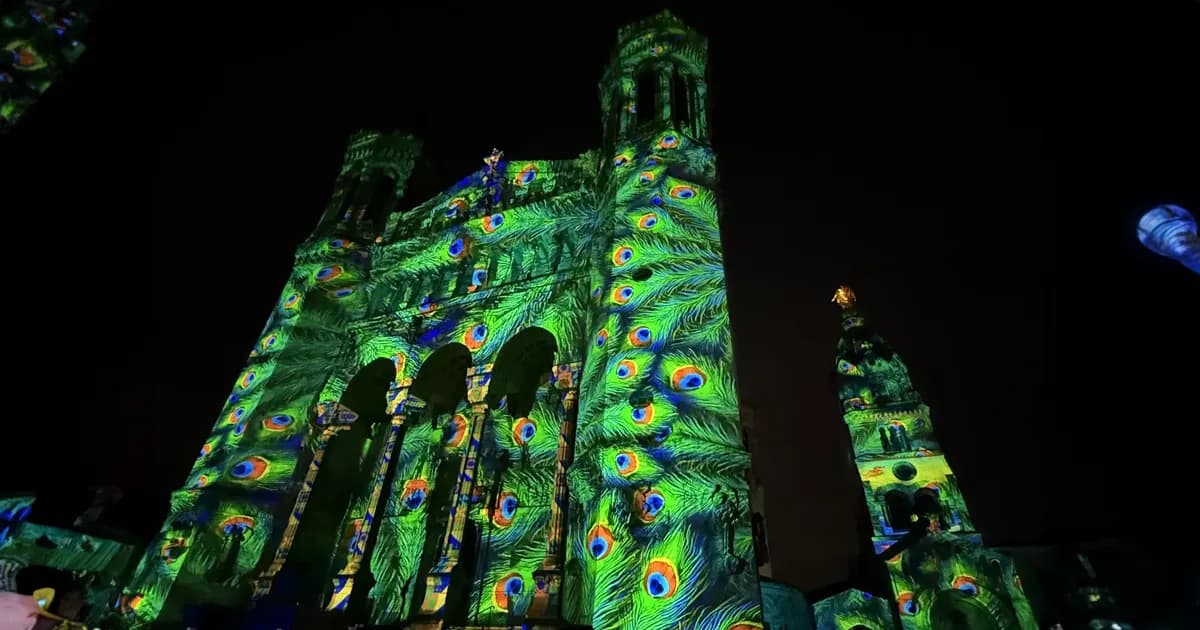
Projected scenography is a scenography where the projected image is part of the setup. The surface becomes a screen, the set comes alive, the wall tells a story.
That is where art curricula drop off. Space design, they know how to teach. The throw ratio of a projector, the alignment of a media server, the blend of two beams, no. That technical layer falls into a blind spot. It belongs neither to the art school, nor really to the short software course.
Why There Is No Video Mapping School
The question is not whether such a school would be useful. It would. The question is to understand why it does not exist.
The Craft Is Too Young and Too Cross-Disciplinary to Fit in a Curriculum
Pro video mapping as practised today is about twenty years old. On the scale of a degree curriculum, that is very young. A school programme takes years to build, to get recognised, to train trainers.
And the craft moves fast. Media servers evolve every year, projectors too, calibration methods even more. A frozen curriculum would be out of date before its first cohort. The craft is shifting ground, not a stable subject.
The Five-Layer Combo No One Teaches Together
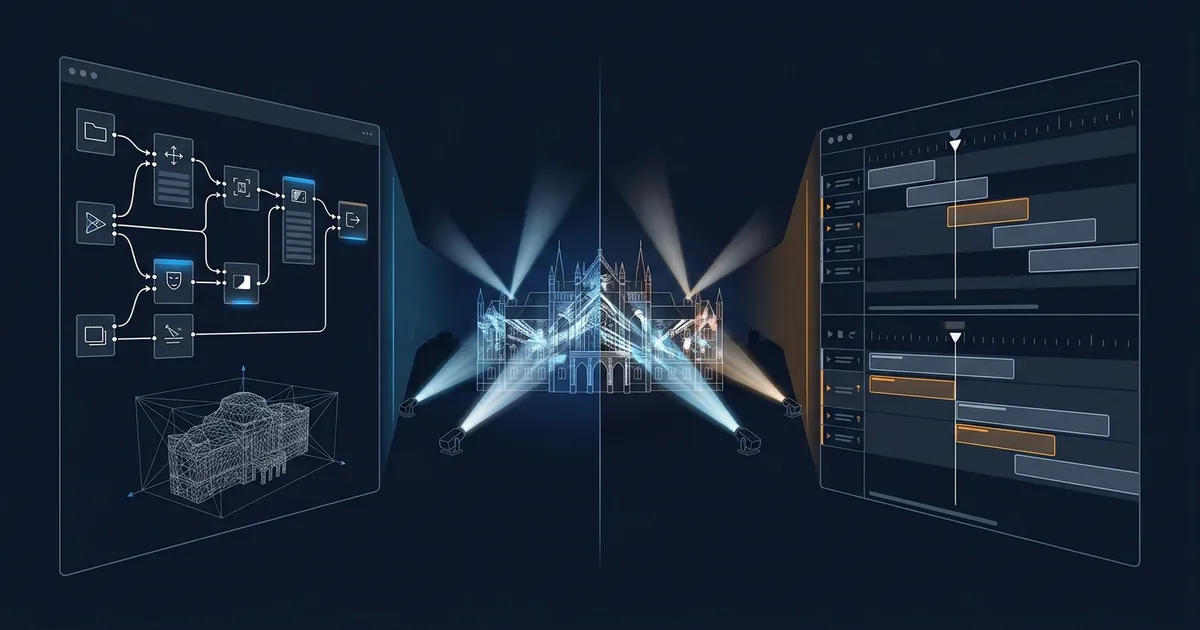
An effective video mapping operator masters five technical layers. 2D image, on Photoshop. 3D, on Cinema 4D or Blender. Code, JavaScript and Python, to script what is missing. The media server, Modulo Player or Modulo Kinetic. And physical integration on site, calibration, blend, signal diagrams.
Each of these layers takes years. And no school teaches them together. An image school trains on Photoshop. A 3D school trains on Blender. A computing school trains on code. No one puts the five on the same table and says: here is what it takes to hold a modern immersive project. To understand how these layers fit together on a real project, the complete video mapping guide runs through the chain.
What That Means for Someone Who Wants to Get Started
The consequence is simple. No one is going to hand you a ready-made path. There is no diploma to aim for, no class to join, no cohort to enter.
That is not bad news. It is just news. In this craft, self-teaching is not a fallback, it is often the right route. I never did higher education. I taught myself 3D, Photoshop and code on my own, from my teens. The craft values what you can do, not the paper.
How to Actually Train in Video Mapping
No single school does not mean no possible training. The path exists. It is built from three sources, in the right order.
Short Media Server Courses: Useful, but That Is Where It Stops
Media server courses exist, and they are good. Usually five days, on a specific piece of software. Modulo Pi offers its official courses on Modulo Player and Modulo Kinetic. I have been a certified Modulo Pi trainer since 2017, and I run these sessions.
What a five-day course gives: the software basics, the logic of the tool, a clean grip on it. What it does not give: the field. A course teaches you to drive the software, not to read a room, choose a projector, or frame a brief. It is a step, not the staircase. Even before choosing a media server course, comparing media servers helps you know which one aims right.
The Field: the Only Place You Learn Calibration and Brief Reading
Multi-projector calibration is not learned in a classroom. Neither is the blend. Reading a client brief even less so. These skills are built on site, project after project, by getting it wrong.
That is where the craft is won. An operator who has aligned thirty facades knows things no course passes on: where a geometry will resist, how a beam reacts to an angle, when a schedule lies. The field is the real school. The only one.
Self-Teaching: 3D, Code, Tools, in the Order That Serves a Project
3D, code, image editing: all of that is learned alone. And the right order is not a school programme, it is the order of a real project.
You do not learn Blender "in full". You learn the part of Blender a project needs. You do not learn JavaScript "for the diploma", you learn it because a media server demands scripting a layer that does not exist. Effective self-teaching is driven by need, not by a table of contents. It is messier than a curriculum. It is also faster towards what is useful.
Stage Design Master's and Art Schools: Who It Is Relevant For, Who It Is Not
A stage design master's makes sense for someone who wants to work on space design, dramaturgy, the culture of the craft. These are real skills, and a school passes them on well.
For someone who wants to do technical projection, a stage design master's falls well short. It will never put you in front of a multi-projector calibration or a media server to debug. The choice depends on what you really want to do, not on the prestige of the diploma. Both profiles exist, and they do not follow the same road.
A Learning Path That Holds Up
No school does not mean no method. Here is what a path that works looks like, depending on where you start.
Where to Start When You Come From Video Operating
If you come from video operating, you already have the signal layer and part of the integration. What you are missing is the creative side and the 3D.
Start with a short media server course to structure what you already half know. Then tackle 3D, not a full course, but on a concrete case: model a surface you know. Code comes after, when a project calls for it. You have the field advantage, capitalise on it.
Where to Start When You Come From Creative Work or 3D
If you come from creative work, you have the image and often the 3D. What you are missing is the media server and physical integration.
Your blind spot is the signal chain and the calibration. A media server course will give you the logic of the tool. The rest, the throw ratio, the blend, the alignment, is learned by going on site, ideally as second on a project held by someone experienced. Creative work gives you a head start on content, not on the delivery technique.
Practising Without Heavy Gear: Studying a Layout Before Holding a Projector
A classic obstacle: training takes gear, and gear costs money. A pro projector, a media server, a powerful 3D machine, that is a budget no one has at the start of the path.
You can get around it. A large part of the study work happens before the gear: thinking through a layout, calculating a throw distance, simulating coverage. Preparing a projection study in the browser, without learning 3D, is exactly the problem Lumeo solves. No powerful machine, no 3D to master to begin: you study a layout on a laptop. Practising on layout cases without a projector in hand is already a large part of the craft.
Training With Someone Who Is Still on the Field
The best shortcut for a self-taught person is someone who has already walked the road. Not a trainer who left the field ten years ago, someone still active, who still aligns projectors.
That is the idea behind the support I am building around Lumeo: a community, bootcamps, real cases, with feedback from someone who still does the craft. Not a catalogue course. Support, on concrete projects. The video mapping and media server training I run follows the same logic: you work on real situations, not on school exercises.
When a Course Is Not Worth It
Not all courses are equal, and some expectations are misplaced. Three cases where money and time are badly invested.
When you expect a diploma to replace the field. A stage design master's is a fine path. It will never do a multi-projector calibration in your place. If the goal is technical projection, the diploma alone is a costly dead end.
When a "video mapping course" oversells a full curriculum in a weekend. The craft is not wrapped up in two days. Five technical layers that each take years do not fit in a weekend. Whoever promises that is not selling a course, they are selling a brochure.
When you want an official paper to reassure a client. A client does not ask for a certificate. The real answer to "where did you train" is the list of projects delivered. Over a hundred projects, you have an answer. A stage design diploma helps on craft culture, it does not replace practice.
Direct Answers
Is there a video mapping course? No dedicated curriculum. There are short media server courses, usually five days, on software like Modulo Player or Modulo Kinetic, and generalist stage design schools. Between the two, nothing. Video mapping specialisation is built on the field and self-taught.
How do you train in projected scenography without a dedicated school? By combining three sources: a short media server course for the software basics, the field for calibration and brief reading, and self-teaching for 3D and code. Support from someone still active speeds up the path, because it avoids the false trails.
Do you need a diploma to do video mapping? No. The craft values what you can do, not the paper. When a client asks "where did you train", the useful answer is the list of projects delivered. A stage design diploma can help on craft culture, it does not replace technical practice.
What is the difference between stage design training and video mapping training? Stage design training teaches space design, light, narrative, often in an art school. Video mapping adds a technical layer those curricula do not cover: throw ratio, media server, calibration, blend. The two complement each other, but neither one is enough alone.
How long does it take to train in video mapping? A basic media server course takes five days. Real mastery, calibration on complex surfaces, hardware choice, quote reading, is counted in years of projects. That is why no school wraps it up: it is not a curriculum, it is an accumulation of fieldwork.
Is a stage design master's useful for video mapping? For someone who wants to work on space design and the culture of the craft, yes. For someone who wants to do technical projection, a stage design master's stays far from calibration and the media server. The choice depends on what you really want to do, not on the prestige of the diploma.
Can you learn video mapping self-taught? Yes, and it is often the right path. The effective operator is not the one with a diploma, it is the one who masters several layers no one taught them together: image, 3D, code, media server, integration. That combo is built project by project.
The absence of a school is not a gap to fill with a diploma. It is the nature of the craft. You train by doing, by stacking the layers, by going on site, and by getting support from someone who is still there. If you are starting out and want to frame the craft first before choosing a road, the stage designer's craft seen from the field sets the scene. And if you want to talk it through with someone who still trains and still aligns projectors, write to me.

Video mapping consultant and trainer
Fifteen years of monumental and museum-grade installations: Arc de Triomphe (7 editions), Museum of Art and Light Kansas (108 projectors), Atelier des Lumières. Design, multi-projector calibration, audit, Modulo Kinetic training.
Need technical expertise?
Let's discuss your video projection or mapping project. Reply within 48h business hours.
Discuss your projectDid you enjoy this article?
Receive my upcoming tips, field experience and best practices straight to your inbox.
By subscribing, you agree to receive our emails. You can unsubscribe at any time.
1 email per week maximum, unsubscribe in 1 click