What Is Set Design? The Job, Training and Reality

Set Design: The Job, the Training and the Reality on the Ground
In short. The word set designer covers ten jobs that have almost nothing in common. A set designer shapes the space of an experience, theatre, exhibition, event, stage, and the word alone does not tell you which one. No degree is legally required, but art schools and master's programs help you get into the network. Pay depends on your status, salaried or freelance, and short-term contract work is the norm in live performance. A growing share of the job runs through projection: projected scenography, a set made of light and pixels, is taught in no curriculum. This article describes the job as seen by someone working the craft next door.
A set designer shapes the space of a show, an exhibition or an event. That is the short answer. The problem is that this sentence covers jobs with almost nothing in common. The theatre set designer spends their days on a scale model and in a build workshop. The exhibition set designer thinks through a visitor's route. The event set designer juggles a stage, truss and a forty-eight-hour load-in schedule.
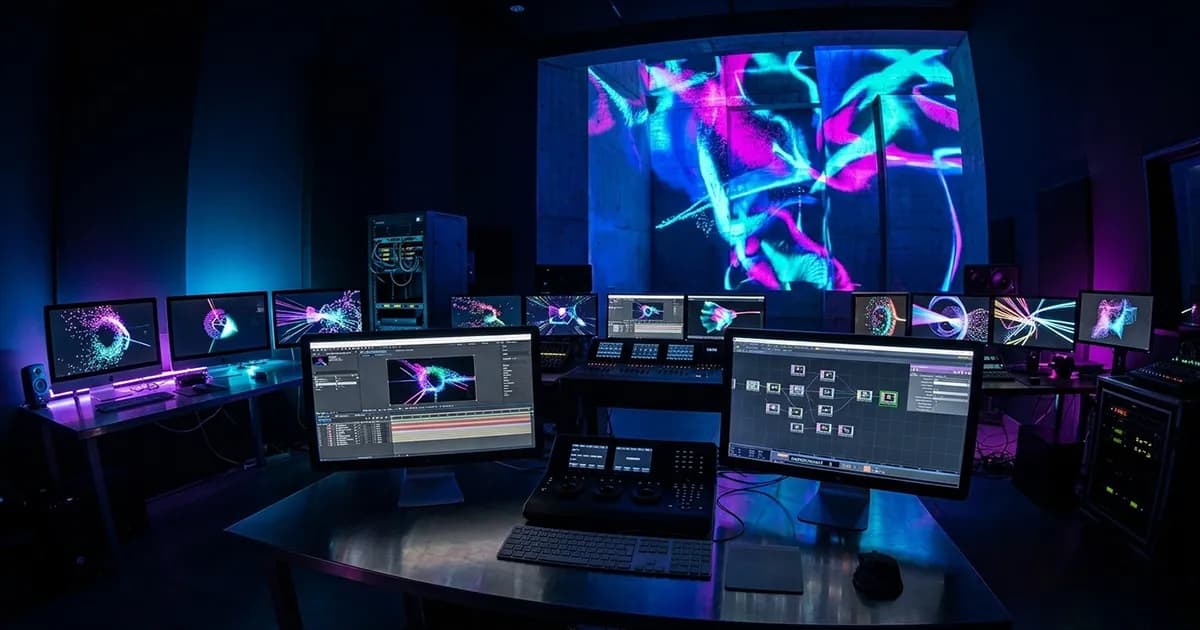
I am not a set designer in the degree sense of the word. I am a video engineer and video mapping specialist. I have worked with set designers for ten years, on projects where the set is no longer made of wood but of projected light. It is that angle, the craft next door, that makes what follows a little different from a standard job description.
(Quick aside: half the people out there confuse a set designer with a decorator, and the other half think it is the person who hangs the curtains. Neither is quite right.)
Scenography: the Definition, Without the Art-School Jargon
Scenography is the design of the space of an experience lived by an audience. Not the decoration of that space. The design. The distinction matters.
What a Set Designer Designs: the Space, Not the Decor
A definition of scenography that holds up: organising a volume so an audience can live something inside it. The set designer decides where you enter, where you look, where you move, what you see first, what you discover next. They think in plans, in sections, in flows.
The decorator dresses that space once the structure is thought out. It is another job, complementary, not the same one. The fine distinction between decorator, set designer and scenographer deserves its own article. Here we stay on the set designer in the broad sense.
One thing people forget: a beautiful set, badly lit, is still a beautiful set that is underexposed. Light is part of scenography, not a layer applied afterwards. The set designer who ignores lighting delivers half a project.
Theatre, Exhibition, Event Scenography: Three Jobs Under One Word
Three families, three daily routines.
- Theatre scenography works in service of a text and a director's vision. Scale model, workshop, build, a cycle of several months.
- Exhibition scenography organises a journey of knowledge. A museum, a museum scenography, a temporary exhibition: the visitor moves alone, the set designer thinks through their itinerary.
- Event scenography designs a stage, a booth, a short-lived setup. The calendar is short, the build is counted in hours.
The same word, three briefs that do not share the same tempo, the same constraints or the same tools. When someone says "I am a set designer," the first real question is "a set designer of what."
The Set Designer's Job Day to Day
The set designer's job is sold on the image of pure creation. The reality looks more like site supervision than inspired sketching.
There Is No Such Thing as a Typical Day
On a project, the set designer moves through phases that do not resemble one another. The site survey, tape measure in hand. The model, physical or 3D. The technical drawings, to scale, readable by a builder. The site supervision, on location, checking that what comes out of the workshop matches the drawing. And sometimes the show operation, the day the space comes alive.
The share of "pure creation" in all that is thinner than people imagine. A lot of management, coordination, drawings corrected because a technical constraint just landed. Someone who wants to draw all day will be disappointed. The set designer spends as much time solving problems as inventing beautiful ones.
Set Design Training: What Exists, and What Does Not
Set design training exists. It is even solid. But it does not cover the whole real job, and that is the most important blind spot in this article.
The Schools and Master's Programs That Actually Train You
Several paths lead to the job. Applied arts and design schools. Architecture schools, some of which offer an architect-scenographer track. Master's programs in scenography at universities or grandes écoles. Institutions such as ENSATT in Lyon train live-performance set designers respected across the field.
These programs deliver two concrete things: a design method, and a network. The network counts as much as the diploma. Scenography is a word-of-mouth world, and a school is a way in.
What No School Teaches: Projected Scenography
Here is the opinion I hold from the field: there are schools for classic scenography, but projected scenography is taught in no curriculum.
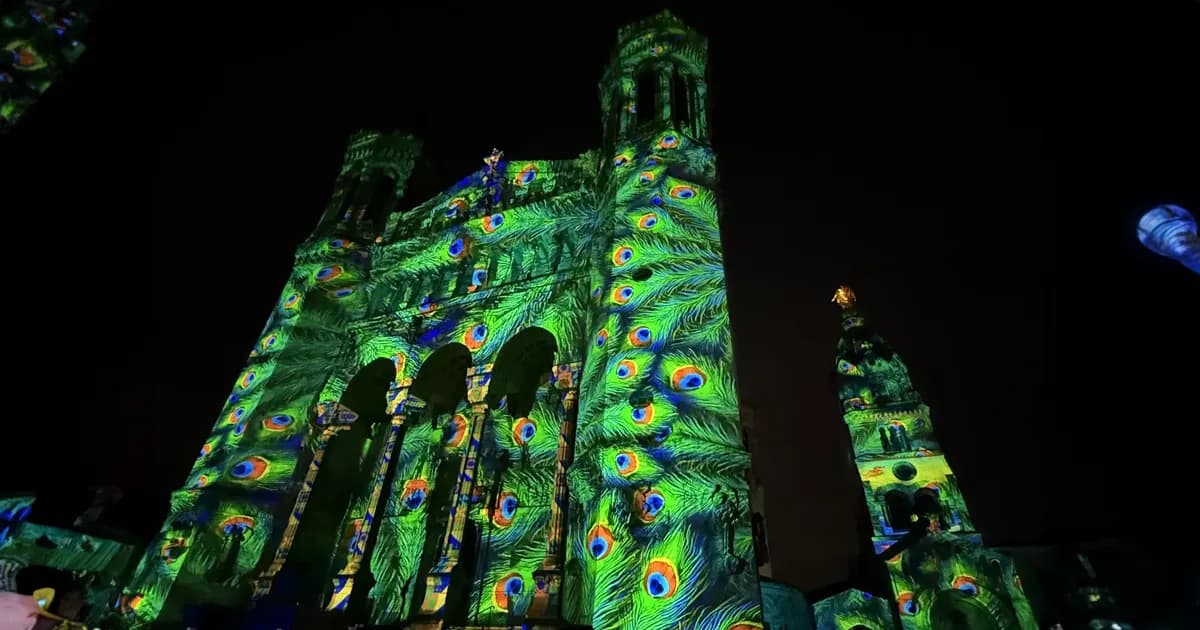
Projected scenography is the set made of light and pixels. Walls covered in images, a volume dressed by projection, a spatial design where the screen has replaced the painted backdrop. This sub-craft is growing, carried by immersive venues and museum experiences. And nobody trains for it.
Neither art schools nor scenography master's programs teach throw ratio, lumen calculation, multi-projector calibration or how to pick a media server. Those skills are picked up on the ground, project after project, or not at all. My own path sums it up: fully self-taught, no higher education, the job learned by doing it. When I was pushed toward video mapping in 2016, several people told me the same sentence within a few weeks of each other: "you, you have to do this." There was no school to go to. There were projects, and the obligation to learn fast.

How Much Does a Set Designer Earn?
The question of a set designer's pay has no single answer, because the job is practised under two very different statuses.
As a salaried employee, a junior set designer in a cultural organisation or an agency earns a modest entry salary, comparable to that of a young project manager. With experience and design responsibilities, pay rises, without ever reaching the levels of architecture or industrial design.
As a freelancer, the set designer bills per project or per day. Income depends on the number of projects, their scale, and how steady the order book is. Many live-performance set designers fall under short-term contract schemes, which smooths the quiet periods but imposes a volume of declared hours to hit each year. I will not invent a figure here: a set designer's pay varies too much by sector and status for an average to mean anything.
Set Design and Projection: Where Video Mapping Enters the Set
This is where my job crosses the set designer's. More and more often.
Projected Scenography: When the Set Becomes Light
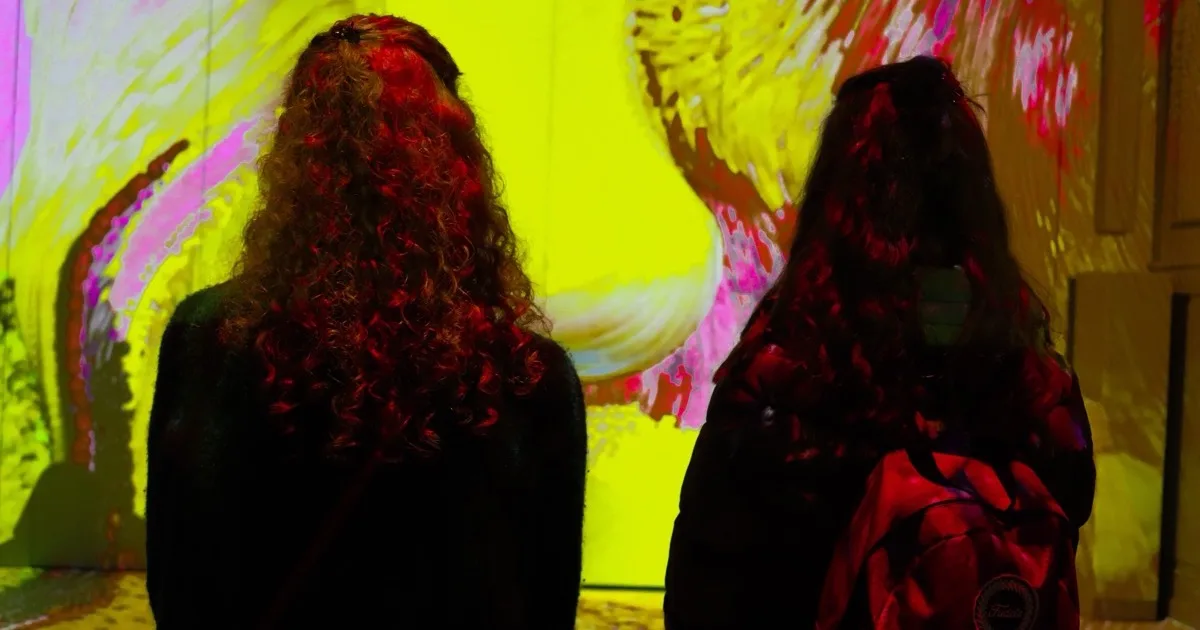
In an immersive venue, the set is not built, it is projected. The walls become an image surface, the floor sometimes too. The "Lights" venues run by Culturespaces, where I have worked since 2019, operate on this principle: no physical set, a scenography made entirely of calibrated light. The Atelier des Lumières in Paris is the best-known example.
This projected scenography asks the set designer to think differently. The surface is not painted once and for all, it changes with every sequence. The constraint is no longer the weight of a set, it is the throw ratio of the projectors and the ambient light level. To understand how an immersive museum scenography is designed technically, see how an immersive museum mapping is prepared.
The Video Engineer's Role in a Set: Turning Intent Into Signal
The set designer designs the intent. The video engineer turns it into a signal that holds. That is my role on these projects.
In concrete terms: the set designer says "this wall should look like it is collapsing." The video engineer answers with a number of projectors, a media server, a calibration chain, and a buffer for tuning time. One thinks the effect, the other guarantees the signal chain can hold it. When the two talk early, the project is calm. When they meet each other at install, it is an all-nighter. Content creation for a projected scenography is the link where intent becomes actually projectable images.
When Becoming a Set Designer Is Not Worth It
I am not going to sell a dream about this job. Here are the cases where aiming for set design is a bad idea.
If you want to do imagery and 3D all day long. Set design is site management, coordination, drawings corrected fifty times over. The share of pure creation is thin. Someone who wants to model and animate content should aim instead for video content creation or video engineering. Those are different jobs.
If you need stable, predictable income. The set design market is narrow. Short-term contract work is hard, the order book irregular, and the quiet periods are part of the job. It is a life choice as much as a career choice.
If you confuse set designer with decorator and it is the decor that draws you in. Those are two distinct jobs. If what you like is dressing a space rather than designing it, decoration is the right door, not set design. The complete guide to video mapping sheds light on the other side, the one where the set becomes projection.
Direct Answers
What is the difference between a set designer and a decorator? The set designer designs the space: the volumes, the flows, the audience's route. The decorator dresses that space once the structure is thought out. They are two complementary jobs, not the same one.
Do you need a degree to become a set designer? No degree is legally required. But master's programs and art schools help you acquire a method and, above all, get into the network, which counts a lot in this world. The projection and show-operation side is taught in no curriculum.
What is a set designer's salary? It varies sharply by status. As a salaried junior, pay is modest and rises with experience. As a freelancer, income depends on the number of projects and often falls under short-term contract schemes.
Set designer or scenographer: what is the difference? In everyday use, very little. Both point to the design of a space lived by an audience. The job title shifts with the country and the sector, but the core craft is the same one.
What should you study to become a set designer? Three main paths: applied arts and design schools, architecture schools with a scenography track, and scenography master's programs at universities or grandes écoles. None of them covers projected scenography, which is learned on the ground.
Does a set designer work with video and mapping? More and more. Projected scenography, the set made of light and pixels, is a growing sub-craft. It sits at the crossroads of space design and video engineering, and calls for working with a video engineer from the design stage.
If you are torn between designing the space and making it work technically, know that the two jobs cross paths more often than people say. And that nobody will teach you the second one at school. If you are preparing a projected scenography project and want a technical read on a projected scenography project, or you are looking for training on the tools of video engineering, write to me. We will talk it through with numbers.

Video mapping consultant and trainer
Fifteen years of monumental and museum-grade installations: Arc de Triomphe (7 editions), Museum of Art and Light Kansas (108 projectors), Atelier des Lumières. Design, multi-projector calibration, audit, Modulo Kinetic training.
Need technical expertise?
Let's discuss your video projection or mapping project. Reply within 48h business hours.
Discuss your projectDid you enjoy this article?
Receive my upcoming tips, field experience and best practices straight to your inbox.
By subscribing, you agree to receive our emails. You can unsubscribe at any time.
1 email per week maximum, unsubscribe in 1 click