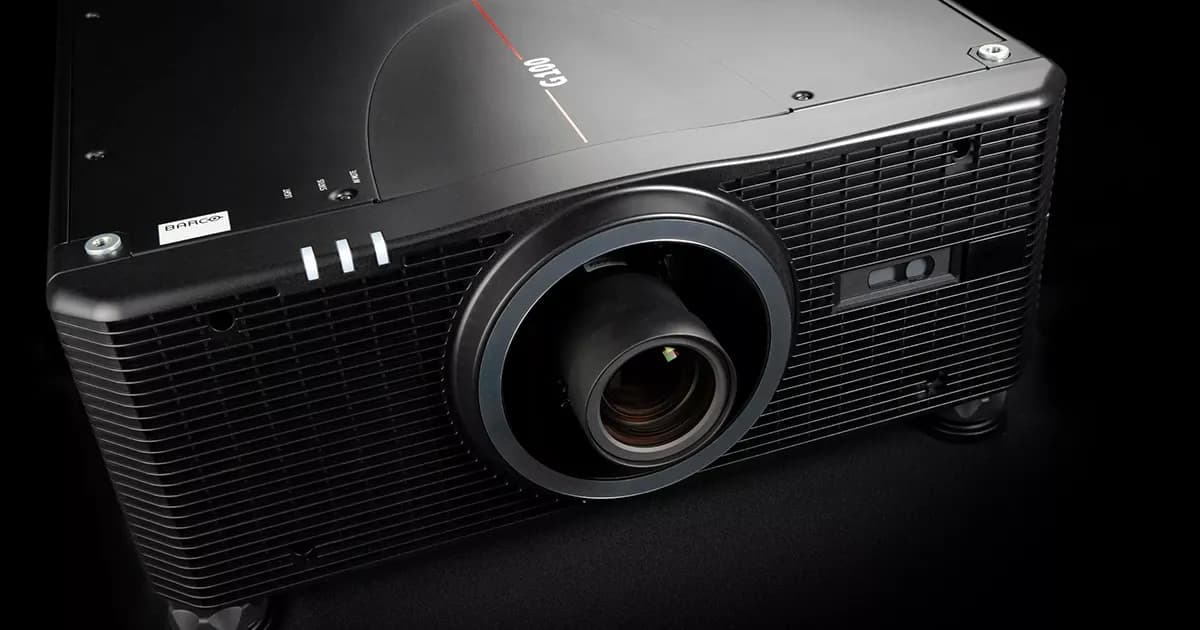
Laser Projector: Lifespan and Real Cost Explained
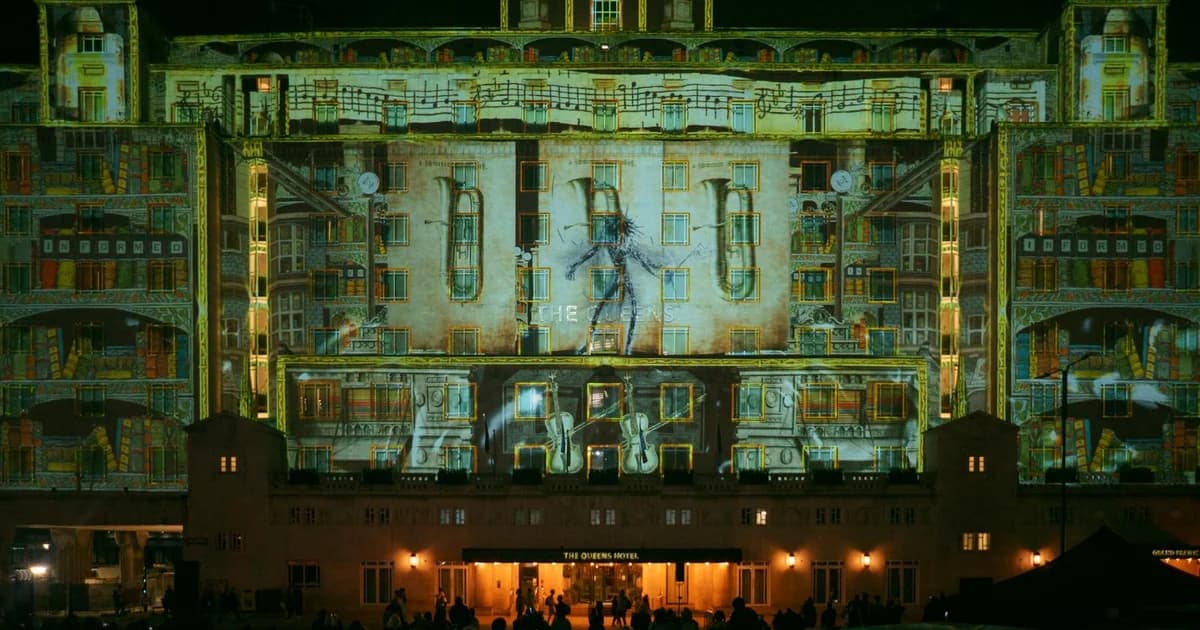

Laser Projector: Lifespan, Real Cost and When to Choose It
In short. The word "laser" on a quote pushes the price up, and half the buyers think they are buying image quality. What they actually buy is a different maintenance curve. A laser projector does not burn out, it slowly fades: the 20,000 hours quoted is the point where brightness drops to roughly half, not a failure. The real question is never laser or lamp, it is over how many hours and how many years you amortise. Laser pays off on installs that run continuously, on hard-to-reach projectors, and in multi-projector setups. On a low number of hours per year, the lamp often stays more cost-effective. This guide reasons in total cost of ownership, not in spec sheets.
The word laser projector on a quote pushes the price up before a single question has been asked. And half the buyers think they are paying for image quality. What they actually buy is a different maintenance curve.
The real question is not laser or lamp. It is: over how many years do you amortise, and how many hours per year does the install run. A laser is not better in the absolute. It is better when the operating profile justifies it. This guide reasons in total cost, like a video engineer who reads a quote and asks "how many hours a year does your install run?" before deciding.
Laser or Lamp: What Actually Changes Inside the Projector
Before talking cost, you need to know what physically changes between a laser and a lamp.
The Light Source: Laser Diode Plus Phosphor vs UHP Lamp
A lamp projector uses a UHP lamp, a discharge bulb. It wears out, and it gets replaced.
A laser projector, in the vast majority of pro AV models, uses a blue laser diode coupled with a phosphor wheel that generates the other colours. That is laser phosphor technology. Pure RGB laser projectors also exist, more high-end, but the common laser projector you will meet on a quote is a laser phosphor.
The key difference: the laser source does not get replaced like a bulb. It is built into the optical block and designed to last the projector's whole useful life.
What Laser Brings on the Usage Side
Three concrete advantages, and they are real.
- Fast start-up. A laser reaches full brightness almost instantly. No warm-up time, no cool-down time before switching back on.
- No bulb replacement. The most visible cost item of a lamp projector disappears.
- Free positioning. Most laser projectors run at 360 degrees: flat, tilted, upside down. Lamp projectors often have limited tilt ranges.
What Laser Does Not Bring
Here is what the sales sheet stays quiet about. Laser is not a guarantee of image quality.
Image quality depends on the panel, the optics and the signal processing, not on the light source alone. An entry-level laser projector can render worse than a good lamp projector. Laser brings colour stability over time and instant start-up. It does not, in itself, bring better contrast or better colours. Buying a laser "for the quality" without looking at the rest of the chain is picking the wrong criterion.
The Lifespan of a Laser Projector: the Figure and Its Nuance
This is the laser sellers' number one argument. It deserves to be read correctly.
The Hours Quoted by Manufacturers
Manufacturers often quote around 20,000 hours for the laser source. Technical pages from manufacturers such as Epson on laser technology detail this figure and its measurement method.
What "20,000 hours" actually means: it is the point where brightness drops to roughly half its original value. Not the point where the projector switches off. Huge nuance. A laser projector at 20,000 hours still works, it is just half as bright as on day one.
Brightness Decay: a Laser Does Not Burn Out, It Fades
A lamp can blow all at once. A laser does not. It decays slowly, hour after hour.
That decay changes how you think about lifespan. A laser's useful life is not measured by its failure, it is measured by the brightness level still acceptable for the project. If your install needs 100 lux on the surface and the projector no longer delivers enough after a few years, it is at the end of its useful life, even if it still works. That is why you have to reason in lux on the surface from the design stage: see the difference between lumens and lux and how to calculate it.
Lamp Lifespan: Why the Bulb Stays a Cost Item
On a lamp projector, the projector bulb is a consumable. Its lifespan is markedly shorter than a laser source's, and it gets replaced several times over the projector's life.
Every projector lamp has a price, and every replacement has a labour cost. A projector lamp, from any manufacturer, is a recurring expense to fold into the calculation. I will not detail the replacement procedure or the maintenance routines here: that is the subject of the article on maintaining and replacing a projector lamp. Here we stay on the decision and the cost.
Total Cost of Ownership Over 3 to 5 Years
Here is the calculation the SERP forgets. The right laser-or-lamp call is not made on the purchase price, it is made on the total cost of ownership.
The Purchase Price: the Laser / Lamp Gap at Entry
At purchase, a laser projector costs more than an equivalent lamp model. That is the starting fact. The laser starts with a handicap on the entry price.
If you stop there, the lamp always wins. That is exactly the short reasoning a buyer holds when they only look at the purchase order. The full calculation begins after.
The Cost of Spare Lamps Over Time
On a lamp projector, you have to add to the purchase price the cost of all the spare lamps consumed over the operating period. The longer and more often the install runs, the bigger that item gets.
I will not publish a pricing grid here, prices vary too much by model. But the principle is clear: the purchase price of a lamp projector is only one part of its real cost. The successive lamps are the other part, and it is invisible on the day of purchase.
Operating Hours: Why a 24/7 Permanent Install Changes Everything
The number of hours per year is the variable that decides. A projector used a few days a month consumes very little lamp lifespan. A permanent-install projector running continuously, sometimes 24 hours a day, burns through lamps at a steady pace.
The higher the annual hours, the heavier the lamp item weighs, and the more the laser catches up its purchase-price handicap. It is mechanical. The break-even point, the moment the laser's cumulative cost drops below the lamp's, arrives all the faster the more the install runs.
The Hidden Cost: the Labour to Change a Bulb at Height
Here is the item people systematically forget. Changing a lamp is not just the price of the lamp. It is the labour.
On a projector sitting at head height, it is quick. On a projector hung eight metres up in a hall ceiling, you need a lift, a technician, sometimes closing the zone to the public, sometimes working at night. That labour cost, repeated at every lamp, can exceed the price of the lamp itself. It is typically the item a rough quote leaves out, and it is often the one that tips the calculation toward laser on a hard-to-reach install.
When Laser Pays Off on a Pro Project
Laser is not better everywhere. It is better in specific cases.
Permanent Installs That Run Continuously
This is the textbook case. A permanent install, museum, park, attraction, signage, running continuously, quickly reaches the laser break-even point. On these projects, laser is not chosen for modernity, it is chosen so you do not send a technician up a lift to change a lamp every year.
I have contributed to monumental permanent installs where this reasoning is central. The Museum of Art+Light, with its 104 Epson projectors and 28 Modulo servers, is exactly the profile where the labour cost on a fleet of that size makes the long-life source relevant. Of the hundreds of projectors deployed over my career, the ones in 24/7 permanent installs are the ones that best justify laser.
Hard-to-Reach Projectors or Tilted Positions
When a projector is hard to access, or installed in a position only a laser tolerates, flat, upside down, steeply tilted, laser simplifies everything. No lamp to change in an awkward spot, and a positioning freedom the lamp does not offer. For choosing a projector on a mapping project, see how to choose a projector for a mapping project.
Multi-Projector Setups Where Colour Consistency Matters
On a wall covered by several blended projectors, colour consistency between the machines is critical. A lamp ages, its colour drifts, and each projector drifts at its own pace. Re-aligning four projectors whose lamps are at different ages is calibration time.
A laser holds a more stable colour over time. On a multi-projector setup in long operation, that stability cuts the drift and the re-alignment time. It is a real argument, provided the project genuinely has several blended projectors.
When a Laser Projector Is Not Worth It
Recommending a laser when a lamp is enough is extra margin for the rental house and money lost for the client. Here are the cases where laser is the wrong choice.
For one-off use or a low-hours rental fleet. If the projector goes out a few days a month, it consumes little lamp lifespan. The lamp item stays small, the laser never catches up its purchase premium. The lamp stays more cost-effective.
When the purchase budget is tight and annual hours are low. Paying more for the laser at entry only to never reach the break-even point makes no sense. If the amortisation calculation does not tip over the project's duration, the laser is a spend that never pays itself back.
When "laser" is on the quote just to look modern. A badly chosen laser is still a bad projector. If the laser source serves as a marketing argument with no operating profile to justify it, it is a word that pushes the price up with nothing in return. Ask for the hours calculation before accepting the "laser" line.
Direct Answers
How long does a laser projector last? Manufacturers often quote around 20,000 hours for the laser source. That figure is the point where brightness drops to roughly half its original value, not a failure. A laser does not switch off all at once: it decays slowly. Its useful life therefore depends on the brightness level acceptable for the project.
Is laser really maintenance-free? Almost, but not entirely. There is no bulb to replace, which removes the most visible cost item. What remains is filters to clean, cooling to watch and optics to maintain. "Maintenance-free" is a sales shortcut: "no lamp replacement" is more accurate.
Does a laser projector give a better image than a lamp model? Not automatically. Laser brings colour stability over time and instant start-up. Image quality depends mostly on the panel, the optics and the processing, not on the light source alone. An entry-level laser can be worse than a good lamp.
After how many hours does laser become cost-effective? It depends on the purchase price, the cost of spare lamps and the number of hours per year. A permanent install running continuously reaches the break-even point far faster than a projector used a few days a month. On a low volume of hours, the lamp can stay more economical.
Can you install a laser projector in any position? Generally yes, it is one of laser's real advantages: most models run at 360 degrees, flat, tilted or upside down. Lamp projectors often have limited tilt ranges. For floor, ceiling or angled projection, laser simplifies the layout.
How do you know if a projector lamp is at the end of its life? On a lamp model, the image loses brightness, the hour counter nears the manufacturer's value, and an alert indicator often lights up. On a laser, there is no bulb to test: the brightness drop is gradual and gets measured rather than flagged.
Does laser consume less than a lamp? Generally yes, at comparable brightness a laser projector is more energy-efficient than an equivalent UHP lamp model. On an install running 24/7, that consumption gap enters the total cost calculation, on the same footing as spare lamps.
Should you prefer a 4K laser projector? Resolution and light source are two separate choices. A 4K laser projector exists, but a lamp projector can also be 4K. Choose the resolution first, by content and image size, then the source by operating profile.
Laser is not better in the absolute. It is better when the install runs enough hours to amortise its purchase premium, and when changing a lamp costs a lift and a night of labour. Before deciding, lay out the numbers: hours per year, years of operation, projector access. The projector choice calculator helps frame the need. And if you have a quote with a "laser" line and a doubt, a second opinion on an equipment quote costs less than a laser bought for an install that runs ten days a year.

Video mapping consultant and trainer
Fifteen years of monumental and museum-grade installations: Arc de Triomphe (7 editions), Museum of Art and Light Kansas (108 projectors), Atelier des Lumières. Design, multi-projector calibration, audit, Modulo Kinetic training.
Need technical expertise?
Let's discuss your video projection or mapping project. Reply within 48h business hours.
Discuss your projectDid you enjoy this article?
Receive my upcoming tips, field experience and best practices straight to your inbox.
By subscribing, you agree to receive our emails. You can unsubscribe at any time.
1 email per week maximum, unsubscribe in 1 click