Immersive Museum Mapping: A Guide to Permanent Installations


Immersive Museum Mapping: A Guide to Permanent Installations
In short. Immersive mapping in museums and art centers is a full economic model in its own right, based on permanent installations open 300 days a year, sometimes with more than 1 million visitors annually. French and international references include the seven Culturespaces sites (Atelier des Lumieres Paris, Bassins de Lumieres Bordeaux, Carrieres de Lumieres Baux-de-Provence, etc.) and the Museum of Art & Light in Manhattan, Kansas (108 projectors, 3,400 sqm, opening 2025). Technical sizing relies on laser-phosphor equipment (20,000-hour lifespan, color stability), projector redundancy per critical zone, network supervision for preventive maintenance, and a hardware replacement plan integrated from design (3-to-4-year cycles in leasing often favored). Daily operation requires a trained crew, quarterly preventive maintenance, annual recalibration and a 5-year TCO that commonly exceeds double the initial CAPEX.
Introduction
Immersive mapping in museums and cultural centers is the segment that has most transformed video projection over the past decade. What was once reserved for a few ephemeral shows has become a full-fledged business model: permanent venues, open 300 days a year, with millions of visitors and proven profitability.
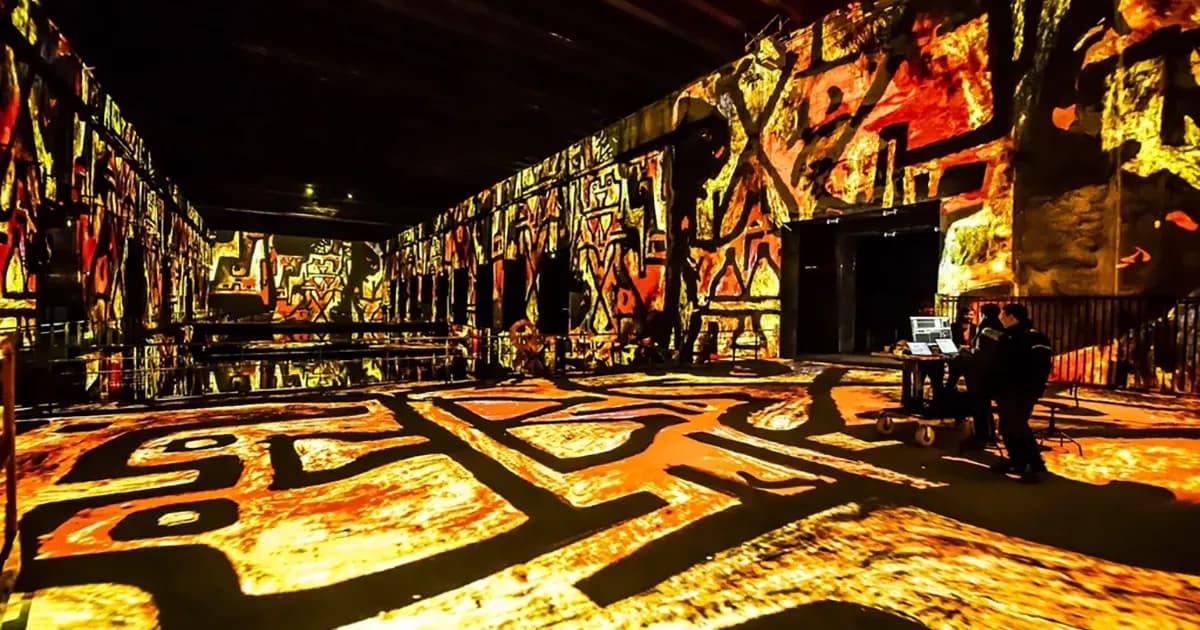
I have had the opportunity to work on several of these projects, from the Culturespaces digital art centers (7 sites in France and internationally, including the Atelier des Lumieres in Paris) to the Museum of Art & Light (MoAL) in Manhattan, Kansas, with its 108 projectors.
But behind the magic of the visitor experience lies a demanding technical reality. An immersive space is not a one-off event that you set up and tear down. It is an industrial system that must run every day, accommodate hundreds of people per hour, withstand the wear of time, and remain profitable over 5 to 10 years.
This article covers the technical, organizational and financial specifics of a permanent immersive installation in a museum context.
Museum and Cultural Venue Specifics
A Broad and Diverse Audience
A museum welcomes everyone: families with children, elderly visitors, people with reduced mobility, school groups, tourists. The installation must be accessible, intuitive, with no user manual. Visitors walk into the space and the experience begins, with no controls to operate, no app to download, no complicated instructions.
This imposes design constraints that are often underestimated:
- No steps: the space must be wheelchair accessible
- Emergency lighting: emergency light units are mandatory under ERP regulations (Etablissement Recevant du Public, the French safety standard for public venues), and their stray light affects the projection
- Floor markings: evacuation routes must remain visible even during projection
- Temperature: projectors generate heat. Air conditioning must maintain visitor comfort despite the thermal load
Artwork Conservation
In a museum that also houses physical artworks, the projection must not damage the collections. UV light emitted by projectors, radiated heat and fan vibrations can damage sensitive materials (pigments, textiles, paper).
Precautions:
- UV filters on optics if projecting near original artworks
- Minimum distance between the beam and sensitive works
- Temperature and humidity monitoring in the rooms
In practice, immersive spaces like those operated by Culturespaces are dedicated projection venues with no physical artworks. The conservation constraint does not apply. But in a traditional museum adding an immersive room, this is a serious concern to address.
Daily Schedules and Operations
An immersive center operates like a cinema: scheduled sessions, audience rotation, maintenance between shows. But unlike a cinema, the projection system is far more complex (dozens of projectors, blending, synchronized content).
Typical day at an immersive venue:
- 8:00 AM - Automated system startup (servers, projectors, audio)
- 8:30 AM - Technical checks (visual alignment, projector status)
- 9:00 AM - Doors open, first session
- 9:00 AM - 6:00 PM - Rotating sessions (30-45 min each), cleaning between sessions
- 6:30 PM - Last session ends
- 7:00 PM - Automated system shutdown
- 7:00 PM - 8:00 PM - Maintenance if needed
The system runs at least 10 hours per day. Over a year, that amounts to 3,000 to 3,600 operating hours. Over 5 years, 15,000 to 18,000 hours. This is what makes laser technology essential (lifespan 20,000-30,000 hours) compared to lamps (1,500-3,000 hours).
ERP Safety Regulations
In France, an immersive space open to the public falls under ERP regulations (Etablissement Recevant du Public, the national fire and safety code for public buildings). Depending on the category (defined by maximum occupancy), safety requirements vary.
Critical points for projection:
- Emergency lighting: standalone emergency units are mandatory, and their light is visible on projection surfaces
- Emergency exits: green illuminated signage, visible at all times
- Fire detection: optical smoke detectors can be disrupted by projector light beams. Thermal or aspiration-based detectors are needed in projection zones
- Maximum occupancy: calculated based on floor area, corridors and exits. Visitor flow must be controlled
- Wheelchair accessibility: strict regulatory requirements
Permanent Installation: Technical Challenges
7-Day Reliability
This is the number one criterion. A projector failing on a Saturday at 2 PM with 300 visitors in the room is a crisis. Reliability is not optional: it is the foundation of the entire architecture.
Reliability levers:
- Laser source: no lamp to replace, lifespan of 20,000+ hours
- Controlled ventilation: accessible filters, properly sized air extraction
- Stabilized power supply: UPS on critical equipment, surge protectors
- Real-time monitoring: each projector's status visible remotely (temperature, hours, errors)
Accessible Maintenance
Projectors are often installed at height (false ceilings, technical catwalks). Maintenance access must be planned from the design stage.
Field rule: If changing a filter or checking alignment requires a lift and 2 hours of handling, maintenance will not get done. Projectors must be accessible within 15 minutes, without heavy equipment.
Solutions:
- Technical catwalks with guardrails (direct access to projectors)
- Projectors mounted on sliding rails (pulled out of position for servicing)
- Access hatches in false ceilings (less ideal but acceptable)
Redundancy
Redundancy is what separates a professional system from an event setup.
Redundancy levels:
| Component | Recommended Redundancy | Rationale |
|---|---|---|
| Projectors | 10-15% additional overlap | Losing one projector does not create a visible black hole (learn more about blending) |
| Media servers | Hot backup (failover) | Switchover in seconds |
| Network | Dual path (ring or dual path) | No single point of failure |
| Power | UPS on servers + switches | Survives micro-outages |
| Content storage | Replication on each server | Each machine is autonomous |
Noise
Noise is a critical issue in immersive spaces. The audience is just a few meters from the projectors. A 20,000-lumen projector produces 40-50 dB. Multiply that by 50 projectors in an enclosed space: the hum becomes unbearable. For visitor comfort, ambient noise should not exceed 40 dB in the room (equivalent to a library).
This is a hardware selection criterion. Always compare projector noise specs before finalizing your choice. A 5 dB difference between two models is perceptible, especially when multiplied across dozens of machines. Manufacturers publish noise levels in normal mode and in Eco/quiet mode.
Solutions:
- Choose projectors with a "reduced noise" mode (some go as low as 35 dB, or even 33 dB on recent models)
- Isolate projectors in ventilated acoustic enclosures (10-15 dB attenuation possible)
- Install projectors in a technical false ceiling with sound insulation
- Orient projector air vents away from the visitor space
- Design the show soundtrack to partially mask residual noise (the show audio should cover machine noise without causing listener fatigue)
The Culturespaces Model: The Reference
Overview
Culturespaces operates 7 immersive digital art centers in France and internationally. The Atelier des Lumieres in Paris (2018) was the first venue of this kind at such scale in France.
Key figures:
- 7 operational sites
- 50 to 150 laser projectors per site depending on size
- Projection surfaces: 2,000 to 12,000 m2 (walls + floor)
- Operations: 300+ days/year, 10h/day
- Attendance: 1 to 2 million visitors/year per site
- Show rotation: 2 to 3 programs per year
Production Workflow
The Culturespaces workflow is industrialized. Each site has a fixed setup: projector positions, blending, canvas resolution. Creative studios work from a precise template and deliver content that integrates without recalibration.
The steps:
- Initial calibration of the site (done once, with periodic adjustments)
- Canvas template delivered to studios (exact resolution, projection zones)
- Content production by studios (3 to 6 months per show)
- Delivery and integration into the media server (testing, timing, audio sync)
- Operations with continuous preventive maintenance
This workflow allows show changes in just a few days: content is pre-validated, calibration is stable, only the files and timeline change.
Typical Technical Infrastructure
A Culturespaces site relies on a centralized architecture:
- Media servers: Modulo Kinetic (multiple V-Nodes per site)
- Network: Fiber optic between servers, copper ethernet to projectors
- Control: Automated startup/shutdown scheduling, centralized monitoring
- Audio: Multichannel system synchronized with video
- HVAC: Sized for projector thermal load + visitor comfort
MoAL Kansas: American Ambition
The Project
The Museum of Art & Light (MoAL) in Manhattan, Kansas, is a 3,400 m2 permanent immersive space designed from the ground up for immersive projection.
Key figures:
- 108 laser projectors
- 6 Modulo Kinetic servers
- Total projection surface: 3,400 m2
- Daily operations year-round
Network Architecture
With 108 projectors and 6 servers, network architecture is critical. A single network failure point can take down an entire section of the experience.
Deployed architecture:
- Fiber optic backbone between servers and distribution switches
- Managed switches with redundancy (RSTP/STP for resilience)
- VLAN segmentation: media network separated from control network
- SNMP monitoring: real-time status of every switch, port and projector
- Bandwidth sized for 108 simultaneous video streams without congestion
Key consideration: Synchronization between the 6 Modulo Kinetic servers must be frame-accurate (genlock or PTP synchronization). A single-frame offset (16 ms) between two adjacent servers creates a visible "jump" in the overlap zones between servers.
Why Modulo Kinetic
The choice of Modulo Kinetic for this project was based on several criteria:
- Scalability: native multi-server architecture, no output limits
- Reliability: built for 24/7 operation
- Auto-calibration: camera-assisted recalibration, crucial with 108 projectors
- Timeline + interactivity: complex show management with interactive zones
- Technical support: vendor support on a project of this scale
Sizing for Daily Visitors
Flow and Rotation
Sizing an immersive space is calculated based on visitors per session and number of sessions per day.
Key variables:
- Capacity per session: depends on floor area (ERP standard: approximately 1 person/m2 in free-standing configuration)
- Session duration: 30 to 45 minutes (show time + audience rotation)
- Rotation time: 10 to 15 minutes between sessions (exit, cleaning, entry)
- Operating hours: 9 to 10 hours of daily opening
Sample calculation:
- 2,000 m2 usable space, ERP capacity: 800 standing visitors
- Target fill rate: 70% = 560 visitors per session
- Session duration: 35 min + 15 min rotation = 50 min per cycle
- Sessions per day: 10h / 50 min = 12 sessions
- Daily capacity: 12 x 560 = 6,720 visitors/day maximum
- In practice (off-peak + peak days): 2,000 to 4,000 visitors/day on average
Impact on Brightness
More visitors means more stray light in the room (light-colored clothing reflecting, smartphones). But the main impact comes from dust: a dense visitor flow stirs up dust that settles on projector filters and reduces brightness over weeks.
Field rule: Plan filter cleaning every 2 to 4 weeks depending on attendance. A clogged filter can reduce brightness by 15 to 25%.
Key Technical Choices
Laser Is Mandatory
For a permanent installation, laser light sources are no longer a luxury: they are a prerequisite.
| Criterion | Lamp | Laser |
|---|---|---|
| Source lifespan | 1,500 - 3,000 h | 20,000 - 30,000 h |
| Source replacement | Every 6-12 months (at 10h/day) | None for 5-8 years |
| Replacement cost | High (lamps are consumables) | None (no consumable) |
| Brightness degradation | Rapid (-30% at half-life) | Slow (-20% at half-life) |
| Startup time | 2 - 5 minutes | Instant |
| On/off cycling | Cooldown wait required | Immediate |
On a 50-projector installation running 10h/day: with lamps, you would need to replace 50 to 100 lamps per year, a significant expense that can represent a substantial share of the annual operating budget. With laser, this cost is zero for 3 to 5 years.
Further reading: Projector Maintenance: Lifespan, Costs and TCO details maintenance cycles by technology.
Network and Monitoring
A system with 50 to 100+ projectors requires a professional network with monitoring.
Recommended network architecture:
- Managed switches (no consumer-grade switches)
- Dedicated VLAN for video stream (separated from control)
- Fiber optic between main nodes
- Redundancy: dual network path or ring topology
Monitoring:
- Each projector exposes data via PJLink, SNMP or proprietary API
- A centralized dashboard displays: status (on/off), temperature, operating hours, alerts
- Automated alerts by email or SMS in case of failure
- History for anticipating replacements
Remote Firmware Updates
Projector firmware updates must be possible remotely, without physical access to each unit. With 100 projectors, a manual update (a technician at each machine) would take several days.
Professional manufacturers (Barco, Panasonic, Christie, Epson Pro) all offer network-based firmware update tools. This is a selection criterion that should not be overlooked.
Maintenance and Operations
Annual Maintenance Plan
| Frequency | Action | Estimated Duration |
|---|---|---|
| Weekly | Visual check of alignment and blending | 30 min |
| Every 2-4 weeks | Projector filter cleaning | 2 - 4 h (depending on access) |
| Monthly | Network and monitoring check | 1 h |
| Quarterly | Blending recalibration (if drift detected), calibration test patterns | 4 - 8 h |
| Biannually | Projector and server firmware updates | 2 - 4 h |
| Annually | Full recalibration + preventive maintenance | 2 - 3 days |
Annual Operating Costs (Typical 50-Projector Installation)
The main annual operating cost items, in order of significance:
- Content renewal (1 to 2 shows/year): this is the heaviest and most variable item. A quality immersive show (30-45 min, multi-resolution, multichannel audio) represents a significant investment that depends on complexity and the studios involved. This item alone can account for half the annual operating budget.
- Electricity consumption (50 projectors x 1 kW x 10h x 300 days): the second-largest item by volume, proportional to the number of projectors and operating hours.
- Maintenance technician (part-time or contractor): depending on the model chosen (in-house or outsourced), this item can vary by a factor of two.
- Software licenses and vendor support: a modest but recurring item, not to be forgotten.
- Spare parts (filters, fans, power supplies): relatively low with laser, but should be budgeted for.
5-Year TCO for a Typical Immersive Installation
TCO (Total Cost of Ownership) is the true cost indicator for a permanent project. The hardware purchase price represents only 30 to 40% of the total cost over 5 years.
Assumptions
- 60 laser projectors, 10,000-20,000 lumens
- 4 Modulo Kinetic media servers + V-Nodes
- Projection surface: 2,500 m2
- Operations: 300 days/year, 10h/day
- 2 shows/year renewed
Estimated TCO Breakdown Over 5 Years
| Item | TCO Share | Notes |
|---|---|---|
| Projectors (purchase or lease, renewal every 3-5 years) | 25 - 30% | First or second largest item depending on tier |
| Content production (10 shows over 5 years) | 25 - 35% | Often underestimated, as costly as hardware |
| Installation, cabling, structures | 7 - 10% | One-time initial cost, amortized over time |
| Electricity consumption | 5 - 7% | Proportional to fleet size and operating hours |
| Media servers + network | 5 - 8% | Software and network infrastructure |
| Technical staff | 4 - 6% | Preventive and corrective maintenance |
| Maintenance and spare parts | 3 - 5% | Low with laser, higher with lamps |
| Initial calibration and commissioning | 2 - 3% | One-time investment at launch |
| Software licenses and support | 1 - 3% | Recurring, typically annual |
Key insight: Content represents as much as, or more than, hardware in the 5-year TCO. This is a commonly underestimated item in business plans. An immersive venue that does not renew its content sees attendance drop from the second year onward.
Another insight: Projector fleet renewal should be planned after 3 to 5 years depending on usage intensity. Laser projectors, while rated for 20,000-30,000 hours, lose brightness progressively. At 10h/day, 300 days/year, you reach 9,000 hours in 3 years and 15,000 hours in 5 years, representing a 15 to 30% brightness loss. Many operators choose leasing over purchasing, which allows fleet renewal every 3-4 years without tying up capital.
FAQ
Can a traditional museum add an immersive room?
Yes, and it is increasingly common. The main constraint is space: you need a room large enough (minimum 200-300 m2 for an immersive effect), with the ability to fully block out daylight, install a technical room, and size the HVAC system. The entry budget for a modest room (10-15 projectors) represents a significant investment in hardware and installation, to which content production must be added.
What is the realistic lifespan of an immersive installation?
The hardware (projectors, servers) has a lifespan of 3 to 5 years under intensive use (10h/day) before requiring significant replacement. With leasing, renewal is built into the contract. Infrastructure (cabling, structures, network) lasts 10 to 15 years. Content must be renewed every 6 to 12 months to sustain attendance.
Is a permanent on-site technician necessary?
Not necessarily. Modern systems are automated (scheduled startup/shutdown, automatic playlists, remote monitoring). A technician visits 2 to 5 days per month for preventive maintenance and updates. In case of failure, intervention within 24 to 48 hours is the standard.
How do immersive centers handle failures during operations?
Through redundancy and graceful degradation. If a projector fails, the overlaps with adjacent projectors partially cover the zone. The show continues with a slight localized brightness reduction. The repair is scheduled outside opening hours. For server failures, automatic failover switches to the backup within seconds.
What is the typical return on investment (ROI)?
With ticket pricing suited to the venue's positioning and attendance of 500,000 to 2,000,000 visitors per year, major immersive centers reach ROI in 2 to 4 years. More modest installations (a museum with a dedicated room) break even in 3 to 5 years if they generate sufficient additional visitor flow.
Can you combine a permanent installation with interactivity?
Yes, and this is a strong trend. Interactive zones (reactive floors, gesture-responsive walls) are integrated into the standard immersive experience. The additional cost is 20 to 40% for the interactive component (sensors, development, calibration). The article Interactive Mapping: Sensors and Techniques details the available technologies.
Need Support for Your Immersive Project?
Designing a permanent immersive installation is an engineering project that commits you for 5 to 10 years. Hardware selection, network architecture, content strategy, maintenance planning: every decision made upfront determines long-term success and profitability.
Let's talk about your project todefine the technical and budgetary scope.
Learn more:
- Event vs. Permanent Mapping: a comparison of both approaches
- Complete Video Mapping Guide: the fundamentals of the discipline
- Free calculation tools: size your installation

Video mapping consultant and trainer
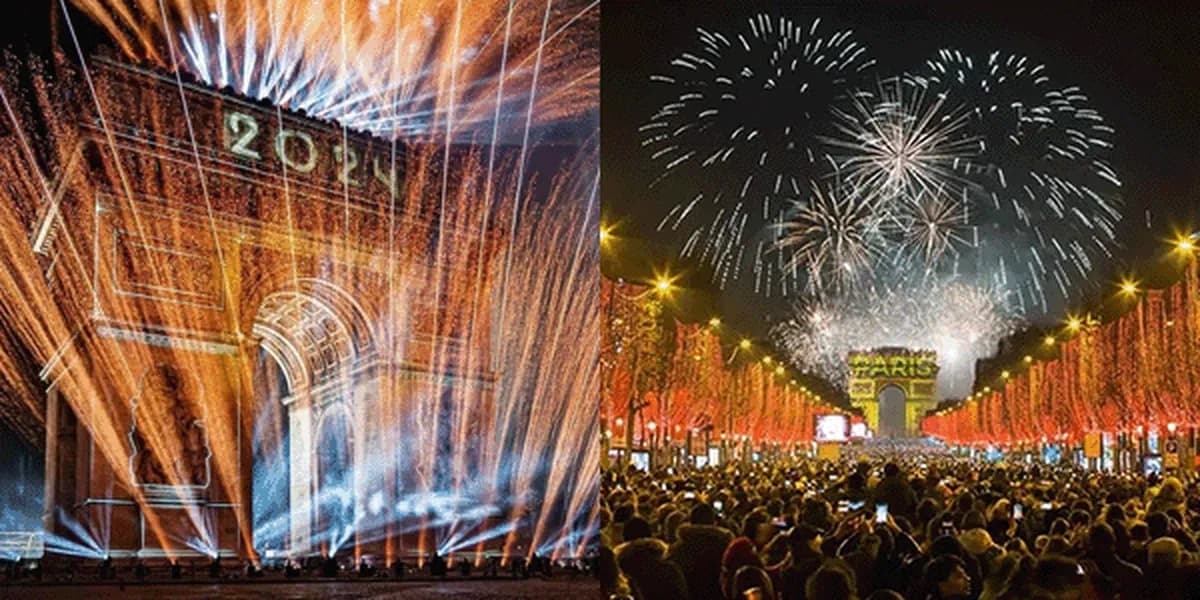
Fifteen years of monumental and museum-grade installations: Arc de Triomphe (7 editions), Museum of Art and Light Kansas (108 projectors), Atelier des Lumières. Design, multi-projector calibration, audit, Modulo Kinetic training.
Need technical expertise?
Let's discuss your video projection or mapping project. Reply within 48h business hours.
Discuss your projectDid you enjoy this article?
Receive my upcoming tips, field experience and best practices straight to your inbox.
By subscribing, you agree to receive our emails. You can unsubscribe at any time.
1 email per week maximum, unsubscribe in 1 click