Projection interactive : quand votre public devient acteur
Conception créative et intégration technique de dispositifs interactifs pour projections immersives
Technologies maitrisées
Je conçois et intègre les capteurs adaptés à chaque projet. Voici les technologies que je mets en oeuvre au quotidien.
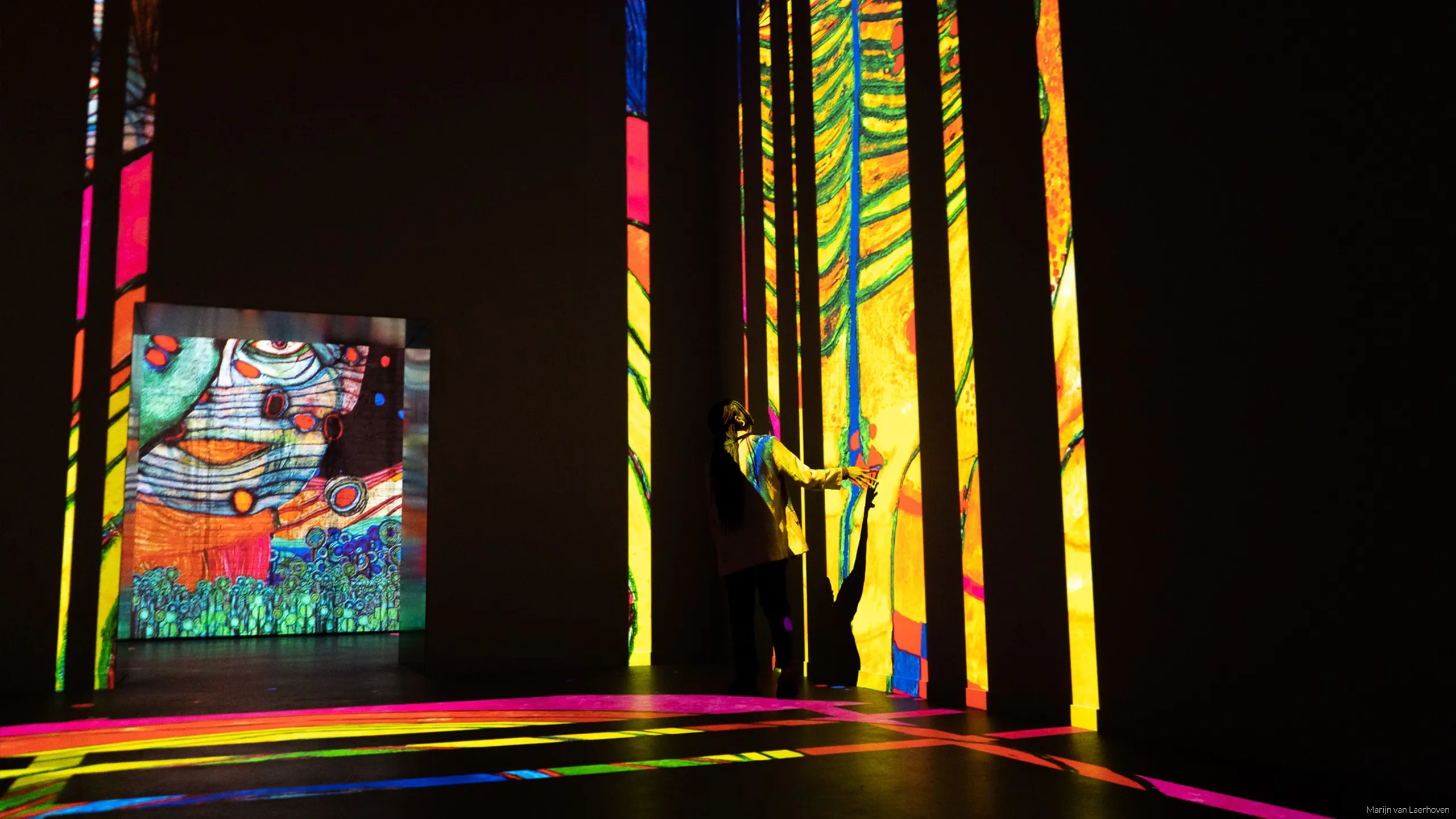
LiDAR 2D
Un faisceau laser balaie une surface plane et détecte la présence ou le mouvement des visiteurs devant le mur. Le système réagit en temps réel pour déclencher des animations à l'endroit exact de l'interaction.
Light Stripes, Amsterdam : les visiteurs révèlent des animations lumineuses en marchant le long d'un couloir de 30 mètres.
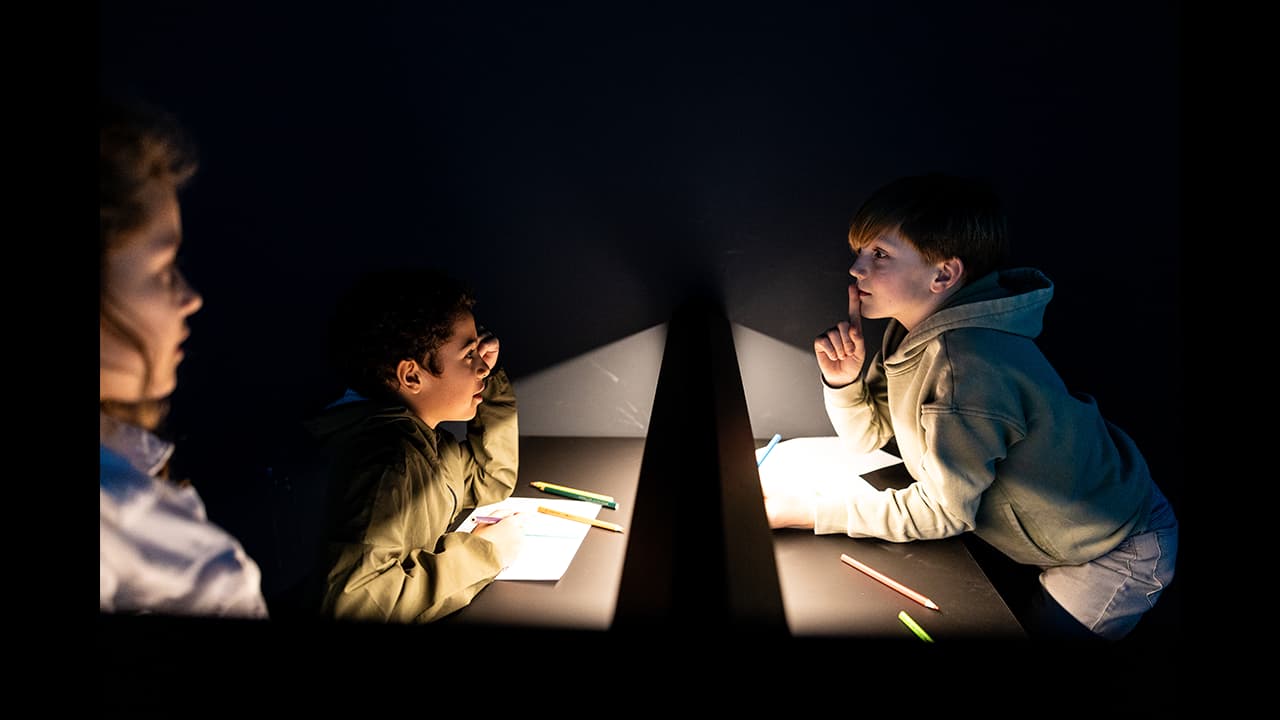
LiDAR 3D
Un capteur volumétrique cartographie l'espace en 3D et suit la position de chaque visiteur dans la pièce. Plusieurs personnes peuvent interagir simultanément, chacune avec sa propre zone d'influence.
Kids Atelier, Paris : les enfants interagissent avec les murs projetés, chacun déclenchant ses propres réactions visuelles.

Scanner de dessin
Les visiteurs dessinent sur papier. Un scanner capture le dessin, le logiciel le transforme en texture 3D animée et le projette sur les murs en quelques secondes.
Kids Atelier, Paris et Hamburg : les dessins des enfants prennent vie sur les murs de la salle.
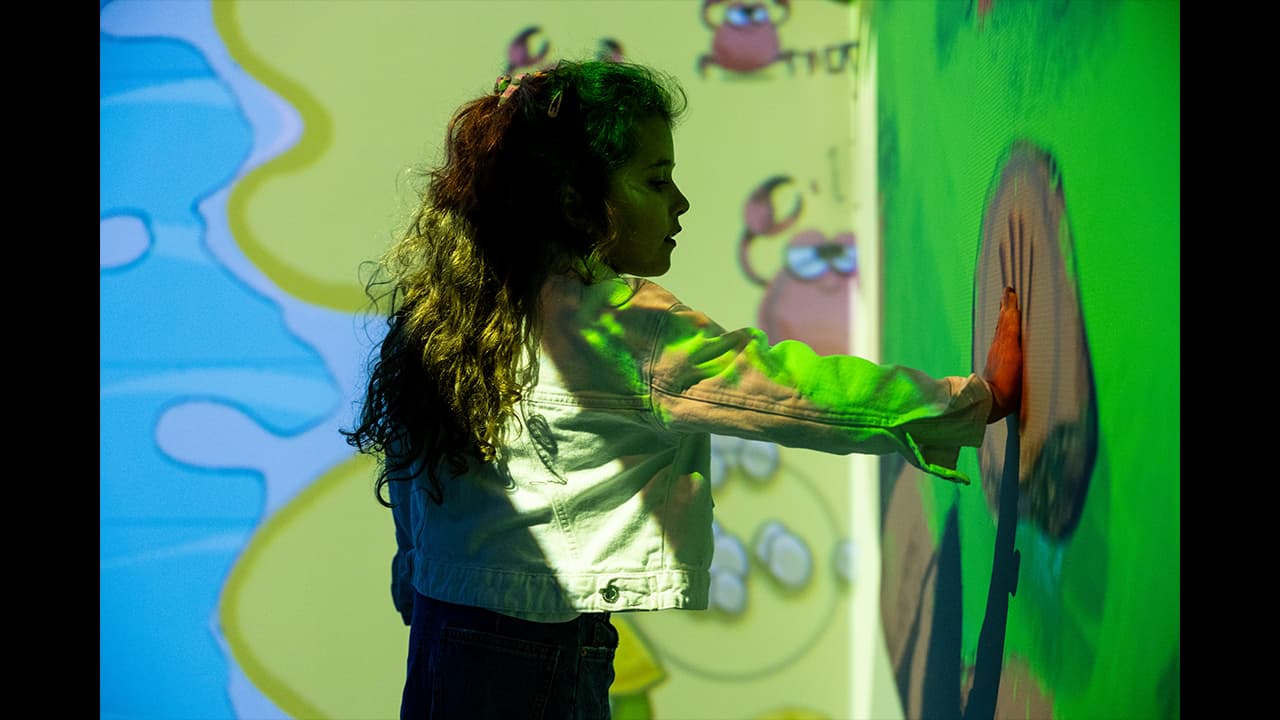
Déclencheurs physiques
Des boutons, encodeurs rotatifs ou capteurs de pression déclenchent des actions dans la projection. Une interface tangible et intuitive, accessible à tous les publics.
Kids Atelier, Hamburg : une course de bateaux contrôlée par des encodeurs rotatifs, jouable à plusieurs.
Types d'expériences
Je conçois et développe des expériences interactives sur mesure, intégrées à vos installations de projection.
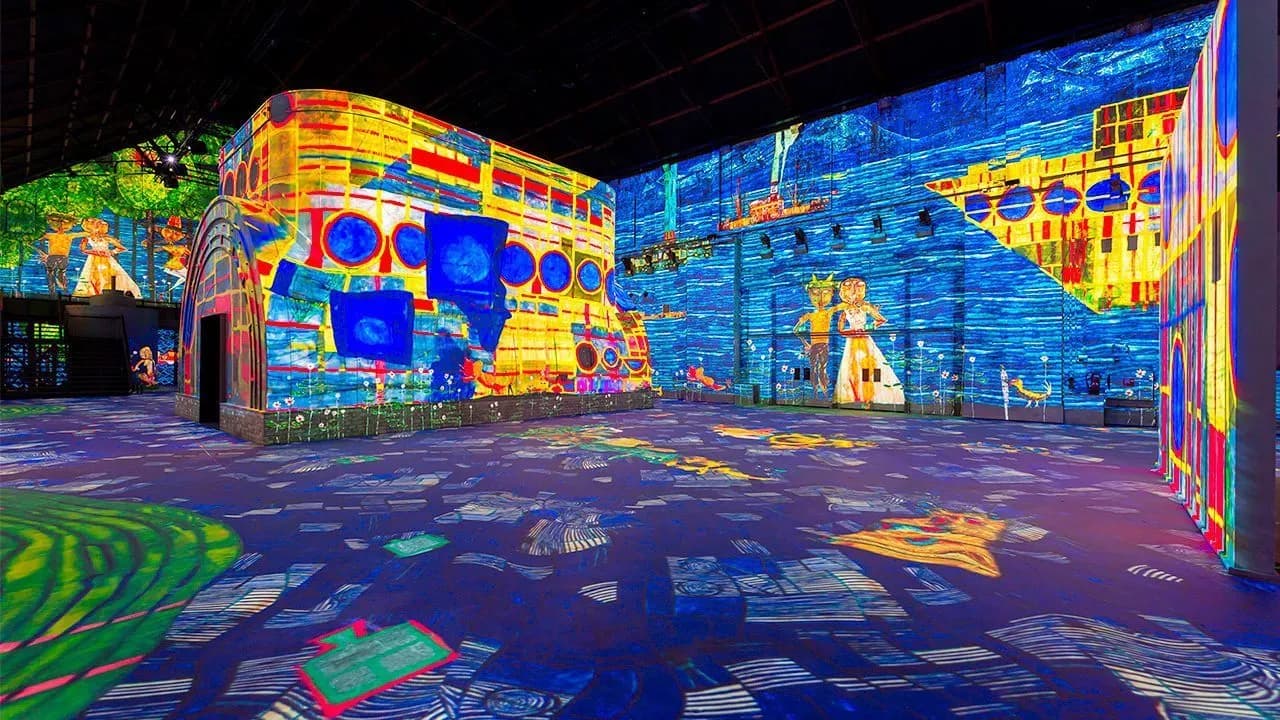
Interactions murales
Détection de présence ou de mouvement pour révéler du contenu, déclencher des animations, suivre les visiteurs. Le mur devient un écran réactif.
Voir le case study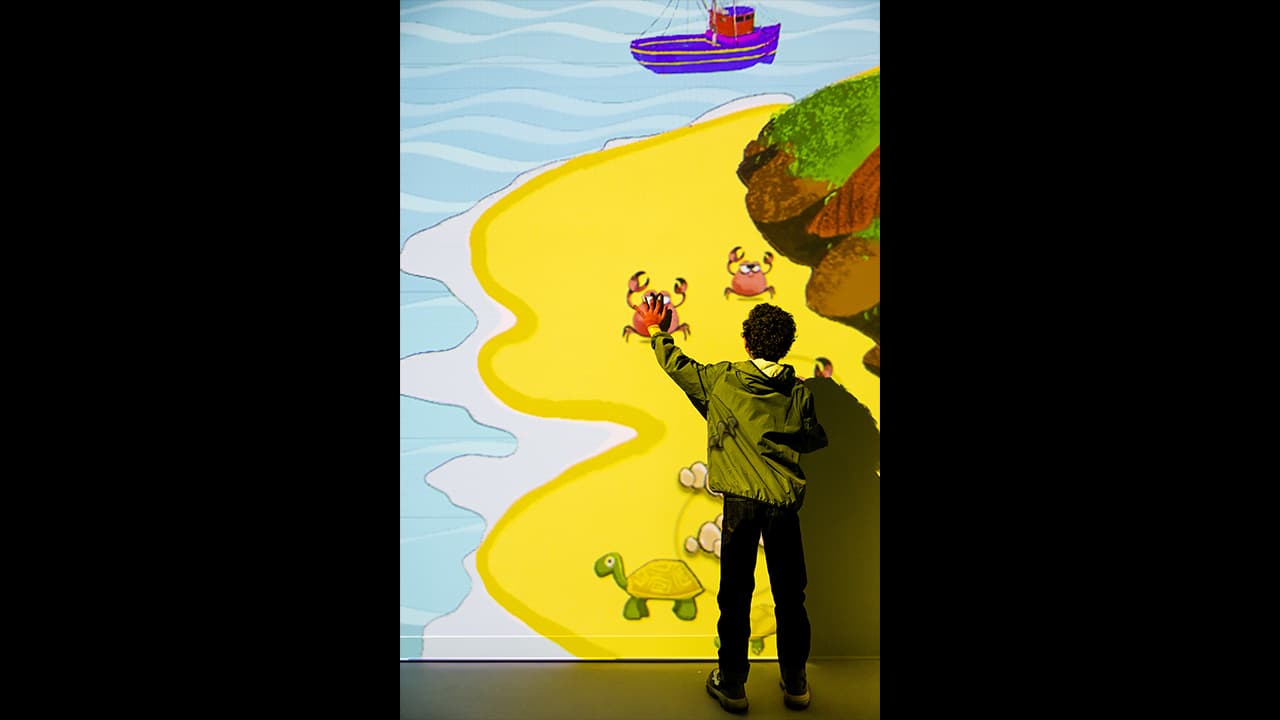
Expériences participatives
Les visiteurs deviennent créateurs : dessins scannés qui prennent vie sur les murs, contenus personnalisés projetés en temps réel. Chacun repart avec un souvenir unique.
Voir le case study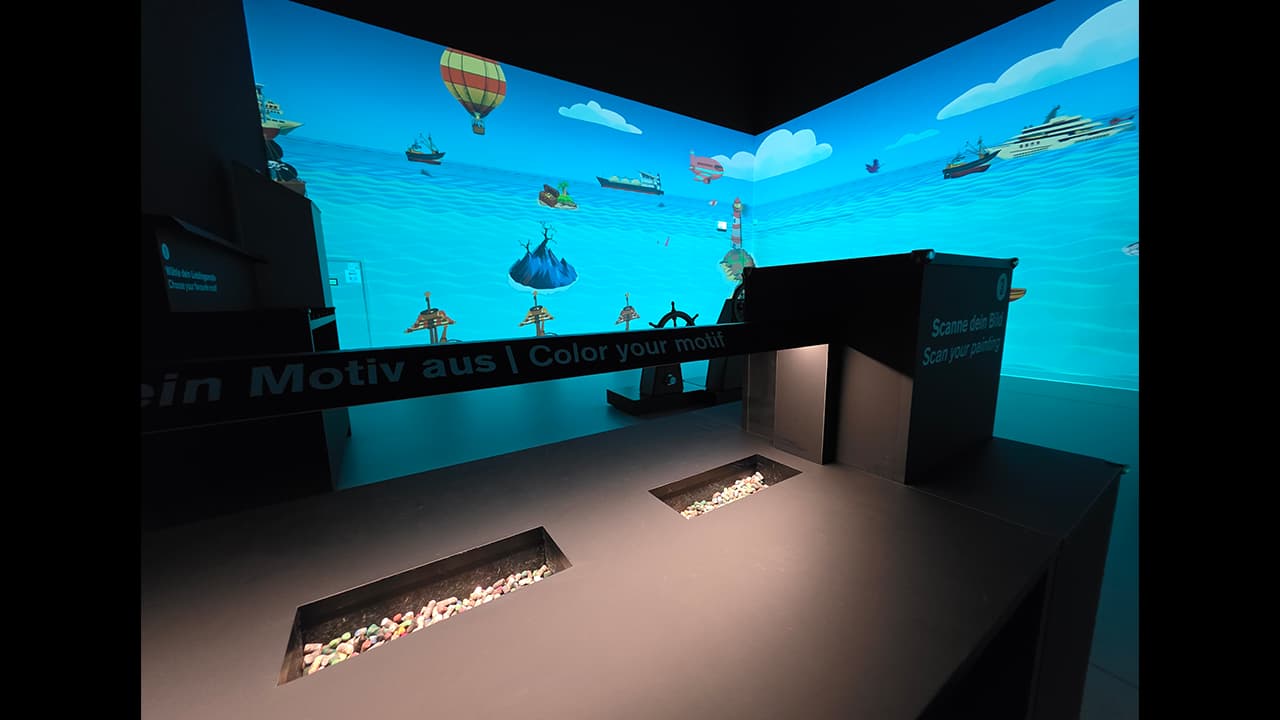
Dispositifs multi-utilisateurs
Des expériences pensées pour fonctionner avec 1 ou 50 visiteurs simultanément, sans file d'attente, sans écran tactile. L'interactivité est dans l'espace, pas dans un écran.
Voir le case studyComment ça se passe
Brief
On définit l'expérience souhaitée et les contraintes du lieu
Conception
Je propose un concept interactif adapté à votre installation
Développement
Je code l'interactivité dans Modulo Kinetic (Python/JS)
Installation
Réglages et calibration sur site
La complémentarité entre les dimensions artistique et technique nous a permis d'atteindre un résultat à la hauteur de ce que nous avions imaginé. Modulo Kinetic offre des outils de rendu avancés qui nous ont permis de créer ce que nous voulions.

Chiffres clés
Ce que vous gagnez
Pour qui
Pour aller plus loin
Case study : expériences interactives
3 projets détaillés avec vidéos, images et résultats.
Guide complet : capteurs pour mapping interactif
LiDAR, caméras, scanners : comment choisir le bon capteur.
Développement sur mesure
Outils et plugins personnalisés pour vos projets.
Intégration technique
Installation et calibration de systèmes de projection.
Une idée d'expérience interactive ?
Me contacterCookies et confidentialité En savoir plus
Cookies et confidentialité
Ce site utilise des cookies pour mesurer l'audience et améliorer votre expérience. Vous pouvez accepter, refuser ou personnaliser vos préférences à tout moment. En savoir plus